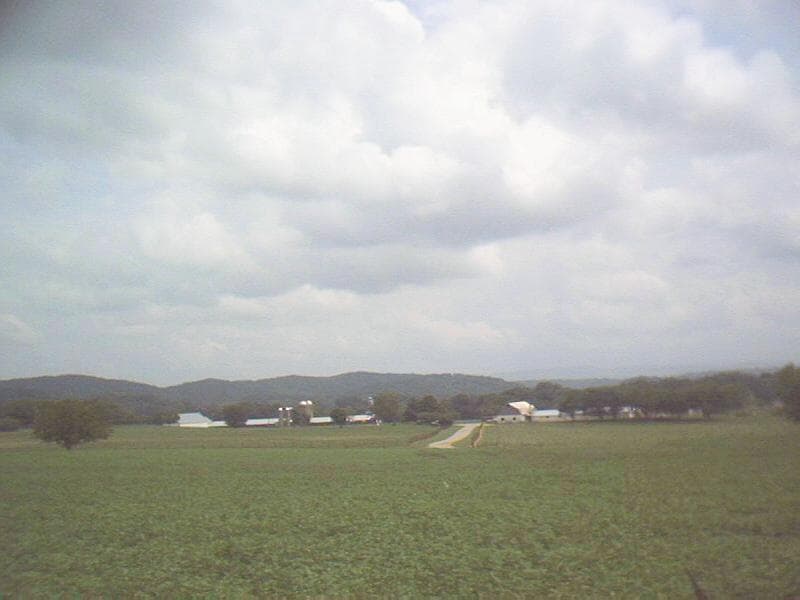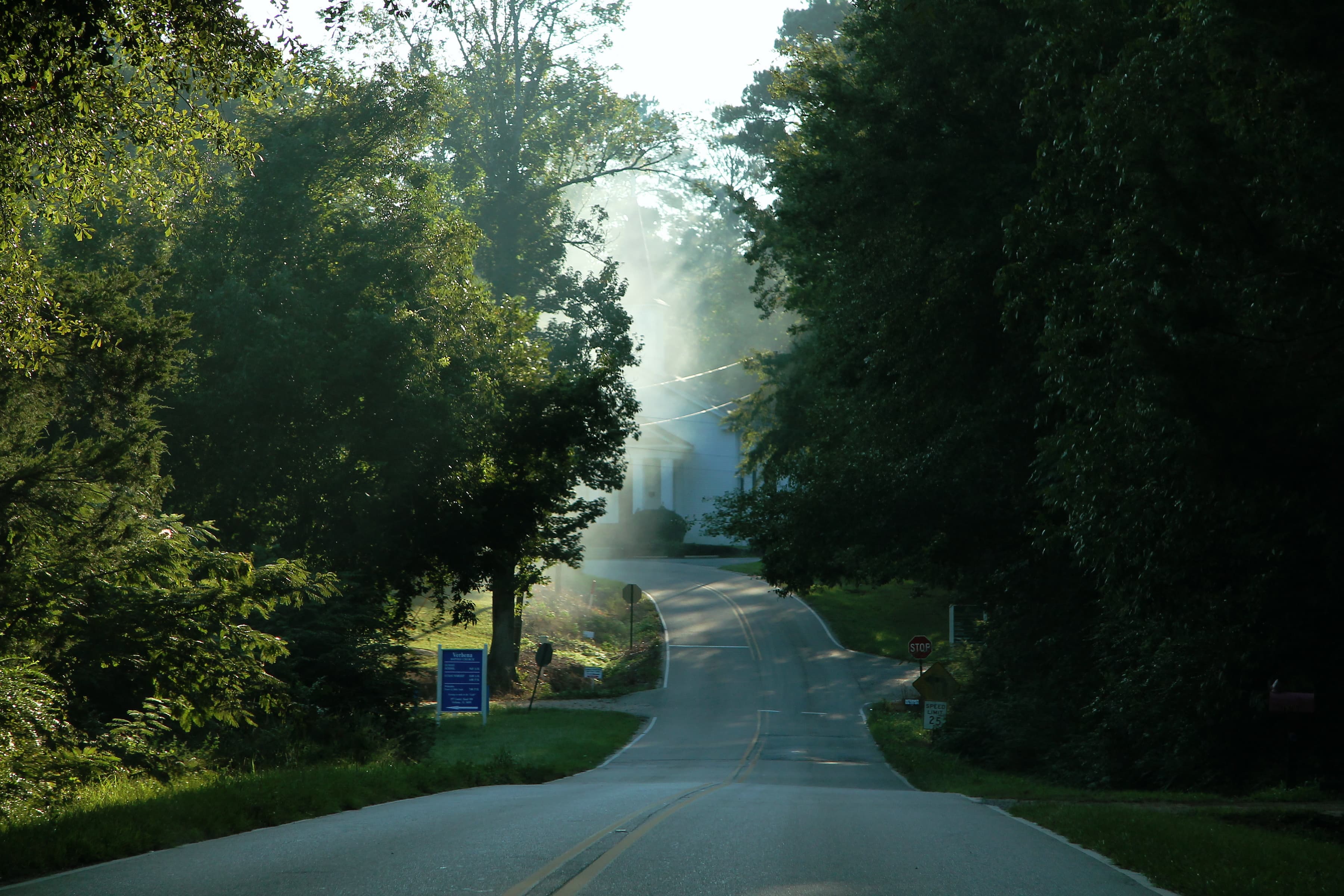

Fourteen acres in Cherokee County, listed at $32,000. The photos show mature pine, good timber, and a creek through the back portion. What looks like a road connection in the satellite view turns out to be a neighbor's private drive. There's no easement recorded anywhere in the county probate office.
That's a landlocked parcel, and finding out after you've paid for a survey is the wrong time.
How Parcels End Up Without Road Access
Alabama's rural land history explains most of it. For generations, families divided land informally: one sibling got the front acreage, another got the back forty, with access to the county road understood by everyone alive at the time and invisible to any buyer who came after. No recorded easement, no surveyed right-of-way.
The result lives in probate records across the state: tracts carved off from larger parcels with no legal connection to a road. North Alabama's ridgelines and creek drainages make it worse. A parcel that looks reachable on a satellite image may share no boundary with any public right-of-way once you check the actual plat.
Alabama records easements at the county probate court, not a separate register of deeds. That's where you look.
What Landlocked Status Does to Price
Expect a 40-50% discount compared to similar roadfront land, and that discount doesn't solve the financing problem. Most lenders won't write a mortgage on a landlocked parcel without documented deeded access, which limits the buyer pool to cash offers.
Then there's the road itself. A mile of gravel road in Alabama, once you add clearing, grading, drainage culverts, and base material, runs $60,000 to $100,000 or more depending on terrain. That expense falls on the buyer after closing.
Alabama's Legal Routes to Access
If you're considering a landlocked parcel, Alabama gives you three paths. None of them is fast.
Negotiate an express easement. A written agreement with the neighboring landowner is the cleanest solution. Both parties negotiate terms and fair compensation; the easement deed gets recorded at the county probate court, creating a permanent record that survives any future sale of either property.
Common law easement by necessity. Alabama courts recognize an implied easement when a landlocked parcel and the neighboring land were once part of a single tract under common ownership, and a later division created the access problem. The burden falls on the landlocked owner to prove that shared history through deeds and title records.
Condemnation under Alabama Code § 18-3-1. This statute gives landlocked property owners the right to petition the probate court for a condemned right-of-way, up to 30 feet wide, to the nearest public road. The Alabama Supreme Court upheld its constitutionality in Lockridge v. Adrian (1994), a Cherokee County case involving property bounded on three sides by Weiss Lake. The landlocked owner must prove genuine necessity and pay fair compensation to the burdened neighbor.
"Genuine necessity" is the hard part. In Ex Parte Cater (2000), the Alabama Supreme Court denied a petition because the owner hadn't demonstrated that alternative access costs were actually prohibitive. Inconvenience isn't enough. You need evidence.
If it goes to litigation, budget for survey costs ($600-$2,500), attorney fees ($3,500 and up), court costs, and compensation to the neighbor. On a small parcel, that can exceed the land's value.
Prescriptive easements exist under Alabama Code § 6-5-200, but the bar is high: 20 years of continuous, open, and adverse use. Informal permission from a neighbor, no matter how long it's been honored, cannot ripen into a prescriptive easement. The claimant bears the burden of proving the use was adverse, not permissive.
What to Verify Before You Make an Offer
The time to discover a road access problem is before the offer, not after you've hired an attorney.
Start with the county GIS map and trace the parcel boundary. Does any edge touch a road right-of-way, or does the parcel float interior to surrounding properties? Then pull the county probate records and look for recorded easements on both the target parcel and its neighbors. If the seller says "there's always been access," ask for the recorded document. A permissive agreement between neighbors is not a deeded easement.
Order a title search before you put money down. A title commitment insures against known defects; a full search shows what's actually on record.
Before spending on surveys and title work, it's worth checking whether the parcel even touches a road. LandWise reports the distance to the nearest road, whether the parcel boundary contacts a road right-of-way, the road type and surface, frontage details, and whether the parcel shows signs of being landlocked. That read can save you title and survey costs on a parcel that may have no viable path in.
If the parcel connects to a state highway, ALDOT requires a driveway permit before any entrance can be constructed. County road connections are handled by the county engineer, and permit requirements vary by county.
For a broader look at how easements work in Alabama and what to look for in a deed, see Alabama Easements Explained.
A survey and a title attorney are the definitive answer. But knowing a parcel might be landlocked before you make an offer saves far more than their combined fees.