A 350-foot well in fractured limestone outside Crossville can cost $10,000 to drill before you've spent a dollar on the pump, and the driller can't guarantee you'll hit usable water on the first hole. About 10 percent of Tennessee residents rely on private wells, and in rural counties on the Cumberland Plateau or in the Highland Rim, that share climbs well past half. The water question changes the budget, the building timeline, and sometimes whether the land is usable at all.
Understanding Your Two Main Options
Private well water means drilling a well on your property and pumping groundwater for your own use. You own the system, you pay to install it, and you are responsible for its maintenance and water quality.
Public or municipal water comes from a regulated water utility: a city, county water authority, or rural water cooperative. A meter is installed at your property line, and you pay monthly for treated, tested water.
For most urban and suburban land, public water is available and connecting is straightforward. For rural Tennessee land, especially in sparsely populated counties, a well is often your only option.
Well Water in Rural Tennessee: How It Works
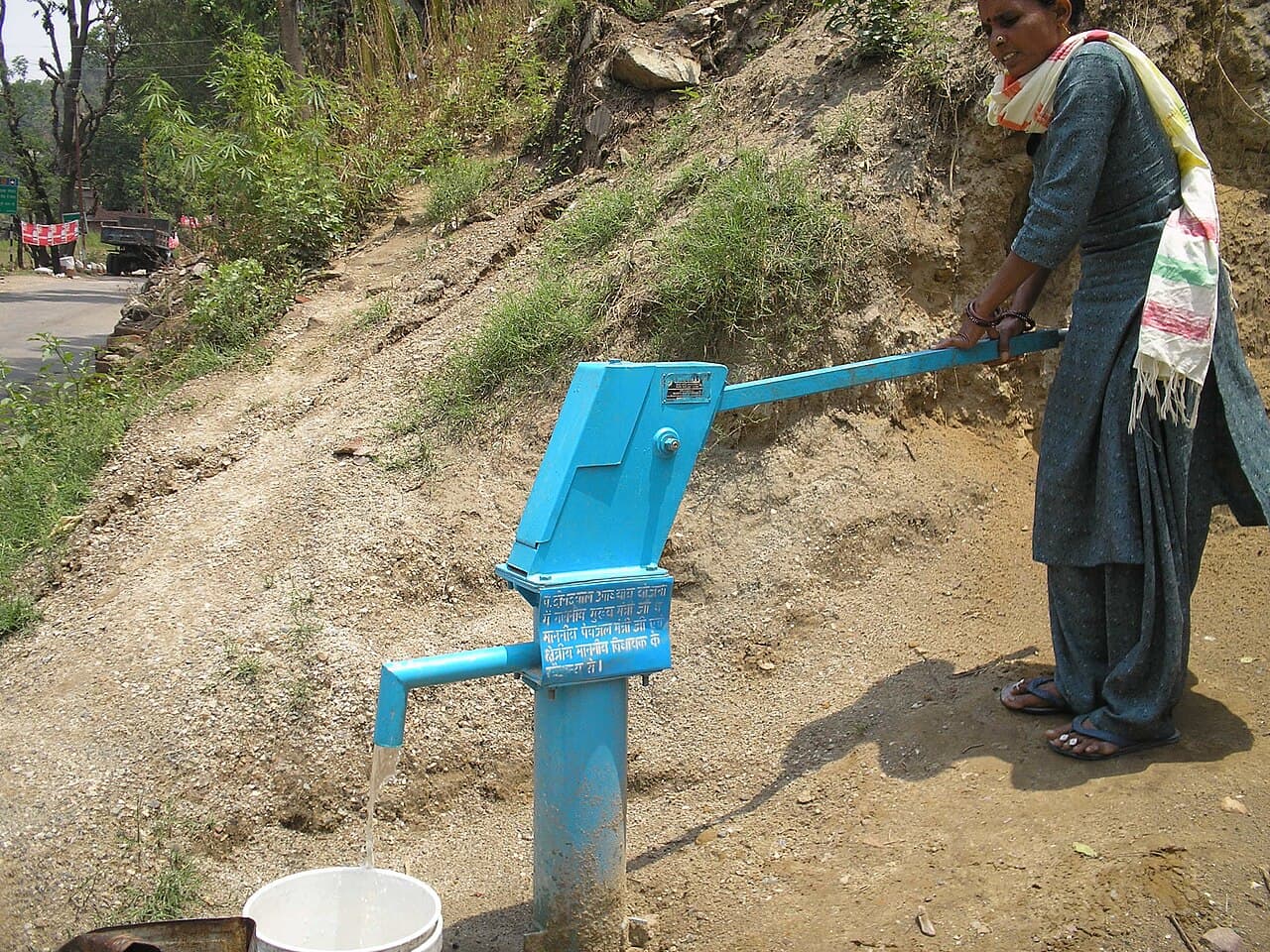
A private well works by drilling down through soil and rock until you reach a saturated aquifer, the underground layer that holds water. A pump brings water to the surface and into a pressure tank, which delivers it to your home or structures.
In Tennessee, well construction is regulated by the TDEC Division of Water Resources. Before any well is drilled, the driller is required to file a Notice of Intent with TDEC. The filing fee is $75. Only TDEC-licensed well drillers may legally drill wells in the state. After the well is completed, the driller must submit a completion report within 60 days.
Key TDEC setback requirements for wells include:
- At least 50 feet from a septic system drain field
- At least 75 feet from a pit privy
- At least 100 feet from animal lots or waste storage areas
If you're planning to combine a well with an on-site septic system, both need to fit on the property while respecting these setbacks. On smaller or irregularly shaped parcels, this can become a real constraint.
The Real Costs of Drilling a Well in Tennessee
Well costs vary widely depending on your location, soil type, and how deep you need to drill to reach water.
Typical cost ranges include:
- Drilling: $15 to $30 per foot, sometimes higher in rocky terrain
- Well pump: $800 to $3,000 depending on depth and pump type
- Pressure tank and plumbing: $300 to $800
- Water quality testing: $100 to $500
For a complete well installation, most Tennessee buyers should expect to spend between $4,000 and $15,000. In areas with difficult geology, such as deep bedrock or fractured limestone, costs can exceed that range.
There is also no guarantee the well will produce adequate water. Some sites require multiple attempts before reaching a productive aquifer, and in drought conditions, shallow wells can fail. Before purchasing land where you plan to drill, ask local well drillers about typical depths and success rates in the immediate area.
Public Water: Is It Available?
Before assuming you'll need a well, it's worth checking whether public water service reaches your parcel or could be extended to it.
Tennessee has hundreds of water utilities: city systems, county authorities, and rural water cooperatives formed under state and USDA programs. Coverage maps are not always easy to find online, but a few approaches work reliably:
- Call the county public works office. They can often tell you whether a water line runs near the property.
- Check with local rural water cooperatives. Many rural Tennessee counties have cooperatives that cover areas outside city limits.
- Contact TDEC directly. TDEC maintains records on public water systems statewide and can point you to the utility serving a given area.
- Ask your real estate agent or the county assessor. In some areas, parcel records indicate whether utilities are present.
If a water main runs within a few hundred feet of your property, connection may be feasible. If the nearest line is miles away, a well is almost certainly your path forward.
Connecting to Public Water: Costs and Timeline
When public water is available nearby, connection costs can range from a few hundred dollars to tens of thousands depending on distance and infrastructure requirements. Most water utilities charge a tap-on fee or connection fee just to get on the system. In Tennessee, these fees typically run $1,000 to $5,000, though rural cooperatives sometimes charge more for extended service areas.
If you need a new line extended to your property, you are often responsible for the cost of the main extension. That can run $20 to $50 per linear foot or more, plus service connection costs. Some cooperatives or county authorities may cost-share line extensions under USDA Rural Development programs, but this typically requires multiple properties to participate.
A public water connection, once established, gives you treated and tested water with no ongoing maintenance burden on your end. Monthly water bills in rural Tennessee generally run $30 to $80 for typical residential use.
Tennessee Geology and Water Quality
Tennessee's geology varies significantly by region, and it affects both well feasibility and water quality.
East Tennessee and parts of Middle Tennessee sit on karst terrain: a landscape underlain by soluble limestone with caves, sinkholes, and underground streams. Karst geology means groundwater can move quickly through fractures in the rock, which increases contamination risk from surface sources. If your property is in a karst area, well placement matters and annual bacterial testing is especially important.
West Tennessee has different geology, with shallower alluvial aquifers that are generally easier to drill but more vulnerable to agricultural runoff contamination.
TDEC recommends private well owners test their water:
- For bacteria: once per year
- For nitrates and metals: every two years
- More frequently near industrial sites, farms with heavy chemical use, or known karst zones
If your concern is "can I actually get water here and how deep will I have to drill," the most useful inputs are nearby well logs and the underlying aquifer. LandWise reports the count of nearby wells within a 1-mile radius and their average depth, the aquifer name and rock type underlying the parcel, and a water-table depth estimate, so you can ground-truth a driller's quote against what neighboring properties actually hit. That same parcel report includes perc-test feasibility for septic, which often shares the constraint of where you can place the well.
Well Water vs. Public Water: A Quick Comparison
Well water:
- Upfront cost of $4,000 to $15,000 (or more in rocky terrain)
- No monthly water bills after installation
- You are responsible for all maintenance, testing, and repairs
- Risk of contamination, especially in karst areas
- Not available on all parcels due to setback conflicts or failed drilling attempts
Public water:
- Lower upfront cost if connection is nearby
- Monthly utility bills (typically $30 to $80 in rural Tennessee)
- Treated and tested by the utility
- Not available in many rural Tennessee areas
- May require expensive line extension for remote parcels
What we'd actually do first
Call the county public works office and the local rural water cooperative the same day; "is there a line at the road?" is a five-minute call that decides whether you're budgeting $1,500 for a tap or $10,000 for a well. If the answer is well only, get two TDEC-licensed drillers on the phone and ask what depth they're hitting on neighboring parcels and what they'd quote on this one (drillers track this; they have to file a completion report on every job). Walk the parcel with the driller's setback rules in mind: 50 feet from any future drain field, 75 from a pit privy, 100 from any animal lot. If those distances don't fit on the buildable area, the water question is really a buildability question.