Roughly 7 percent of Tennessee households still rely on satellite as their only internet option, and on a wooded parcel in the Cumberland Plateau even that can fail an obstruction check. Internet access is the one utility you can't always solve with money: if there's no line-of-sight to a tower, no fiber project on the books, and a thick canopy over the southern sky, the parcel is offline regardless of your budget.
This guide explains the types of internet available on rural Tennessee land, how to verify real coverage before you make an offer, and what the state's ongoing broadband expansion means for buyers today.
Why Internet Access Matters More Than Ever
Remote work has permanently changed how people evaluate rural property. Buyers who once prioritized views and acreage now have a hard requirement: they need enough bandwidth to join a video call, upload files, or run a home office. Short-term rental hosts need reliable internet for smart locks, security cameras, and guest Wi-Fi. And for anyone planning to eventually build a home on raw land, connectivity is a baseline quality-of-life issue.
Despite significant investment in recent years, Tennessee still has a meaningful rural broadband gap. According to BroadbandNow, about 91.2 percent of the state's population has access to service at or above the federal 25 Mbps/3 Mbps minimum threshold. That sounds promising until you realize the remaining gap is concentrated almost entirely in rural areas, and that approximately 7 percent of Tennessee households rely solely on satellite, the option of last resort.
In rural counties such as Pickett, Van Buren, or Perry, the picture looks very different than it does in Hamilton County or Knox County. Ground-level coverage on a specific parcel can also differ significantly from county-wide statistics.
Types of Internet Available on Rural Tennessee Land
Understanding your options is the first step. Rural parcels in Tennessee typically have access to one or more of the following:
Satellite Internet
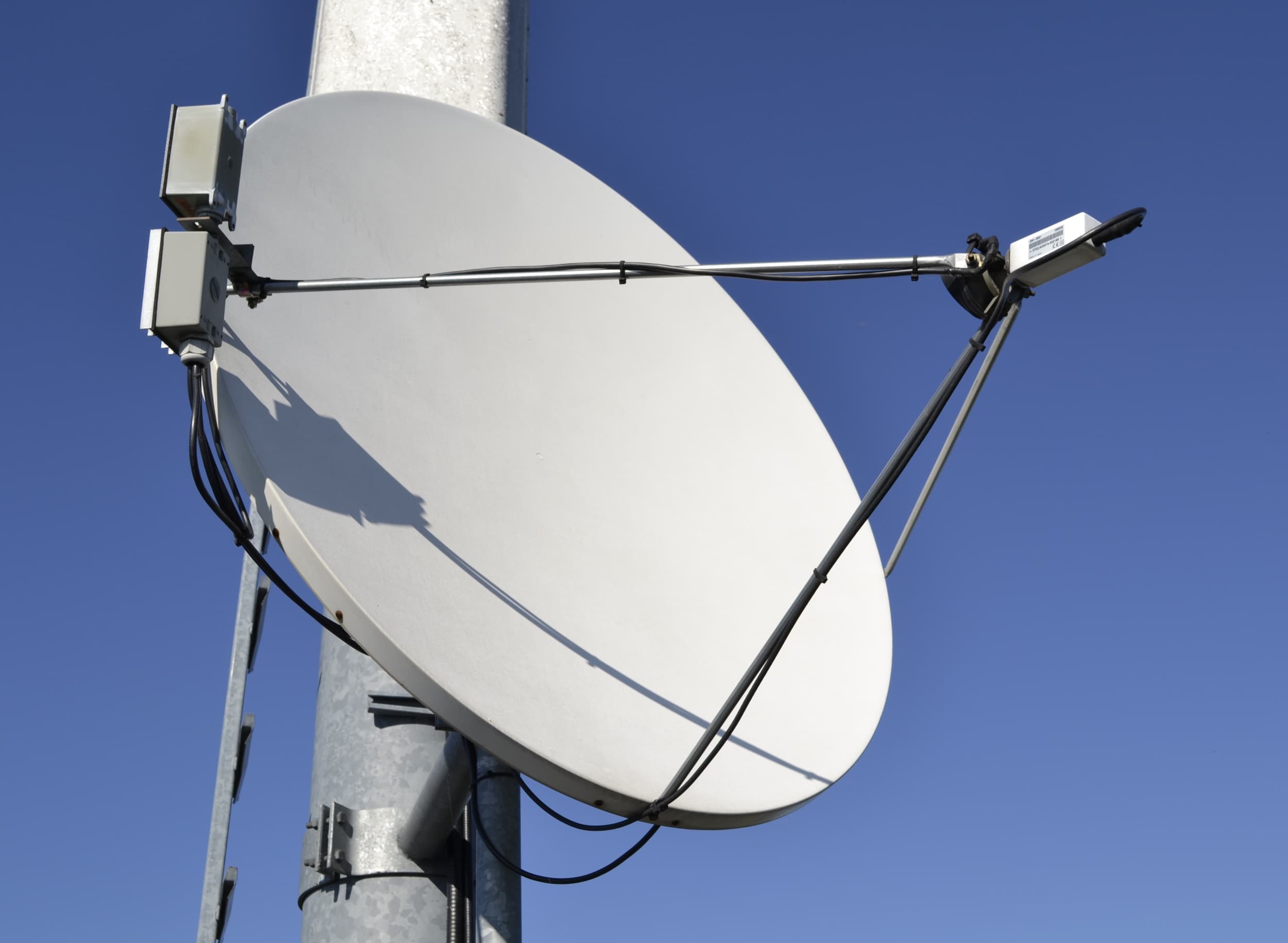
Satellite internet beams a signal from low-orbit or geostationary satellites directly to a dish mounted on your property. It is available virtually everywhere in Tennessee, including the most remote hollows of the Cumberland Plateau and the ridge-and-valley country of East Tennessee.
Traditional satellite (HughesNet, Viasat): These older geostationary systems offer speeds up to 25 to 100 Mbps but come with high latency (around 600 milliseconds or more), which makes real-time video calls and online gaming frustrating. Plans typically include data caps that throttle speeds after a monthly limit.
Starlink (low-Earth orbit): SpaceX's Starlink has changed the rural broadband picture significantly. With download speeds typically between 50 and 200 Mbps and latency around 20 to 40 milliseconds, it behaves much more like a fixed broadband connection. As of 2025, Starlink service is available across virtually all of Tennessee. The main requirements are a clear, unobstructed view of the northern sky and a flat or roof-mounted dish. Dense tree canopy, ridgelines, or structures blocking the sky can degrade or disable service.
Fixed Wireless
Fixed wireless delivers internet via radio signals from a ground-based tower to an antenna mounted on your building. In Tennessee, regional co-ops and small ISPs provide fixed wireless in many rural areas, often at speeds of 25 to 100 Mbps.
Coverage is hyper-local: a tower that serves one ridge may not reach the next hollow a mile away. Whether a specific parcel has line-of-sight to a tower is a question only the ISP can reliably answer, and you must ask before you buy.
DSL
Digital Subscriber Line (DSL) internet runs over existing telephone infrastructure. In rural Tennessee, AT&T provides DSL coverage in areas where older copper phone lines exist. Speeds can range from a few Mbps to 25 Mbps depending on how far your property sits from the telephone company's nearest facility. The farther you are, the slower the connection. Many rural parcels that technically have phone service do not have DSL speeds adequate for modern use.
4G LTE and 5G Home Internet
Cellular-based home internet from providers such as T-Mobile and Verizon uses the same towers that deliver mobile phone service. T-Mobile Home Internet has expanded rapidly and now covers a substantial portion of rural Tennessee. Speeds vary widely by location and congestion, typically falling between 25 and 100 Mbps, with slower performance during peak hours or in areas with fewer towers.
Check your cell signal at the parcel before assuming this option works. A property that gets a weak cell signal in a valley may not support reliable home internet even if an adjacent county shows coverage on a map.
How to Check Real Coverage Before You Buy
Official coverage maps are a starting point, not a guarantee. FCC rules require internet providers to report coverage at the census block level, which means a provider can claim to serve an area even if only one property in a large block technically qualifies. Use the tools below, but verify with site-level checks.
FCC National Broadband Map (BroadbandMap.fcc.gov): Enter a specific address to see which providers have reported service there and at what speeds. Tennessee residents can also challenge inaccurate data on the map.
ISP address lookups: Go directly to each provider's website (AT&T, T-Mobile, Starlink, local co-ops) and enter the parcel's physical address or legal description. ISPs often have more accurate location-level data than the FCC map.
Starlink Obstruction Check: If you are considering Starlink, download the Starlink app and use the obstruction checker from the physical parcel. Point your phone at the sky from where the dish would mount. The app will show whether trees, buildings, or terrain will block the satellite view. Do this before you close, not after.
Call local ISPs directly: Small regional providers like rural electric co-ops and local telephone companies often serve areas that the national providers do not. Search for the county's rural electric or telephone cooperative and ask whether they offer internet at the specific parcel address.
Check cell signal on-site: Visit the property with your phone and test download speeds using multiple carriers. A cellular-based backup connection can supplement a primary service or serve as your only option on some parcels.
If your concern is "can I actually work from this parcel," the question to answer first is which providers report service to this address and at what speeds. LandWise pulls the FCC Broadband Map data for the parcel and returns the provider list, technology codes (fiber, cable, DSL, fixed wireless, satellite), and the maximum reported download speed. That gives you a starting list to call directly; it doesn't promise you'll be served, but it tells you who claims they can.
Tennessee's Expanding Broadband Landscape
Tennessee has been aggressive about closing its rural broadband gap. The state is distributing approximately $813 million in federal funds to providers willing to build new infrastructure in unserved and underserved communities, with a goal of reaching more than 120,000 additional Tennesseans by late 2026. This investment is happening across dozens of counties, including many of the rural areas that land buyers find most attractive.
What this means for buyers: a parcel with no broadband today may have fiber or fixed wireless within two to three years as buildout projects complete. The Tennessee Broadband Office publishes grant award information and project timelines, which can help you understand whether infrastructure is coming to a specific area.
That said, planned coverage and available coverage are different things. Build schedules slip, and county-level grants do not guarantee coverage on every parcel. If you need reliable internet now, verify what exists today.
Common Mistakes to Avoid
Trusting the FCC map alone. Coverage maps overestimate availability in rural areas. The map shows what providers have reported, not what you can actually purchase and receive at a specific address.
Assuming satellite works everywhere. Starlink and other satellite options require a clear sky view. Mature hardwood forest, deep ravines, and south-facing ridgelines can make satellite impractical even on parcels with full satellite "coverage."
Forgetting to ask the neighbors. People who live within a mile or two of the parcel can tell you what actually works in that area. This informal intelligence is often more reliable than any map.
Not testing on-site. Coverage checks done from a nearby town or driveway can differ from what you get in a hollow, behind a ridge, or under a heavy tree canopy. If the internet option matters to your intended use, visit the parcel and test it.
What we'd actually do first
Pull the FCC Broadband Map result for the exact address, write down every provider listed, and call each one with the parcel's 911 address; verbal confirmation from a sales rep beats anything on a map. While you're on the property, run the Starlink app's obstruction check from the likely dish location and an in-browser speed test on each cellular carrier you have a SIM for. If the answer is "Starlink only and the canopy is borderline," price a tree-clearing quote into the offer or walk; that's not a problem you can solve later for free.
For broader land-buying due diligence in the same county, see our Hamilton County land buying guide.