
A 0.5-acre lot on a 25% slope in Hamilton County can easily run $40,000 in grading and retaining walls before a foundation is poured. The same-sized lot on a 5% slope might run $6,000. That single variable, more than acreage or even view, is what separates a fair price on Walden Ridge from a money pit. At 542 square miles, Hamilton County combines Chattanooga with genuinely rural terrain on Walden Ridge, the Chickamauga Lake shoreline, and the agricultural flatlands of the northern county.
This guide covers land prices, zoning, property taxes, geography, flood risk, utilities, permits, and the agencies that govern what you can do with land here.
Land Prices in Hamilton County
Hamilton County consistently ranks among the highest-volume land markets in Tennessee, and one of the higher-priced. Expect a wide range depending on location, parcel size, and whether the land carries water frontage, road access, or development potential.
Current per-acre pricing by parcel size, based on recent market data:
| Parcel Size | Approximate Price Per Acre | |---|---| | 0–2 acres | $112,000 | | 2–5 acres | $66,000 | | 5–10 acres | $45,000 | | 10–20 acres | $32,000 | | 20–100 acres | $22,000 |
Pricing reflects the premium that proximity to Chattanooga commands. Total listing values across LandWatch, Land.com, and similar platforms consistently show over $470 to $572 million in active Hamilton County inventory, representing tens of thousands of acres.
Where prices are highest: Signal Mountain, Lookout Mountain, and areas adjacent to Chickamauga Lake with water views or dock rights command top dollar. Properties near Ooltewah and eastern Hamilton County with good road access are also pricing well as suburban growth extends eastward.
Where value exists: Northern Hamilton County communities (Sale Creek, Birchwood, Soddy-Daisy, and the rural tracts along Walden Ridge's eastern face) tend to offer the most acreage per dollar. A 52-acre wooded tract in the Soddy-Daisy area may be available for under $200,000; compare that to a 1-acre lot in Signal Mountain at a similar or higher price.
Geography and Terrain
Understanding Hamilton County's terrain matters before targeting a search area, because the county contains four distinctly different landforms, each with its own building conditions, flood risk profile, and utility situation.
The Tennessee River Gorge and Chickamauga Lake
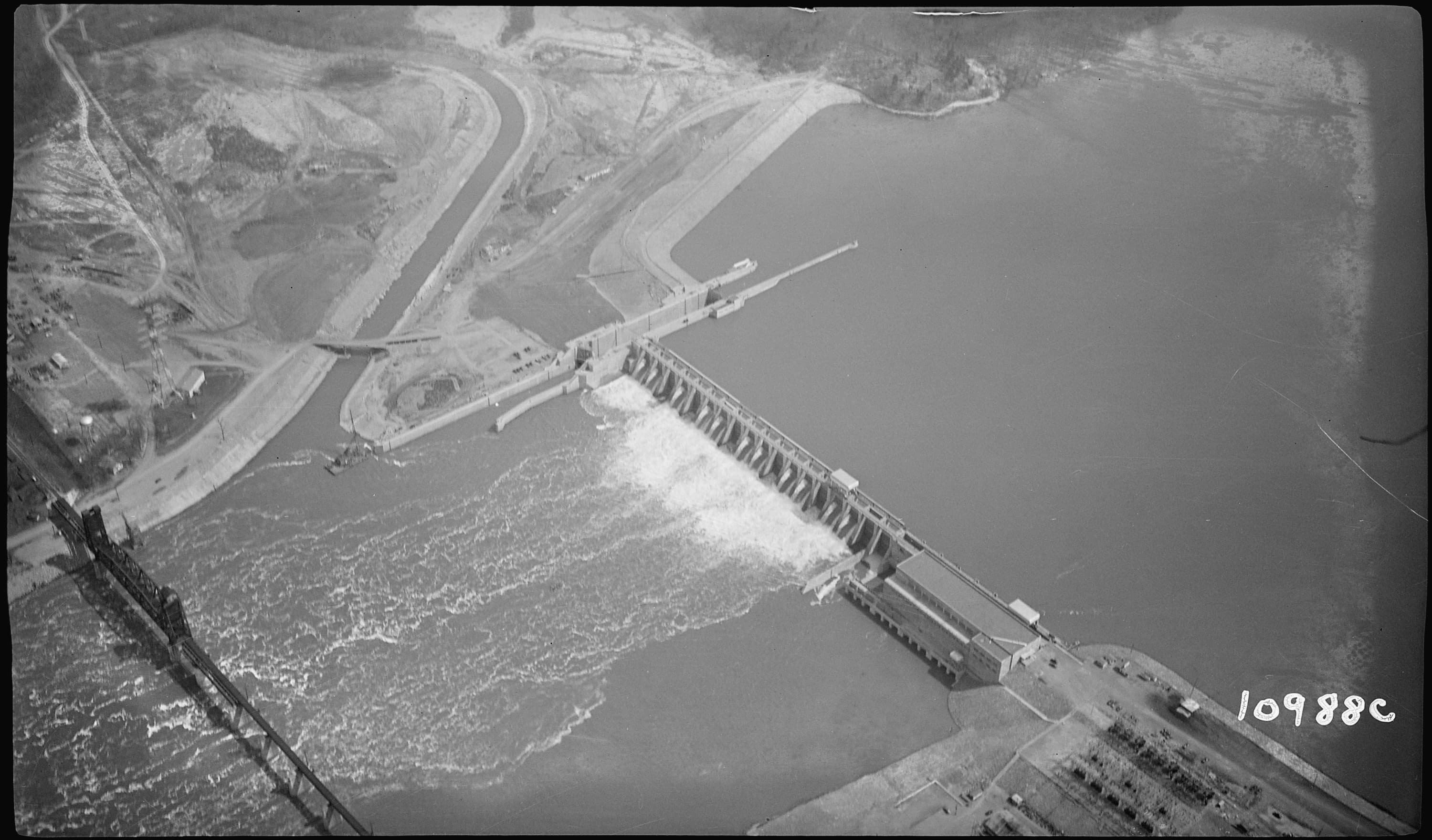
TVA's Chickamauga Dam, completed in 1940, impounded the Tennessee River to create Chickamauga Lake, a 59-mile reservoir with 784 miles of shoreline spanning Hamilton, Bradley, Meigs, McMinn, Rhea, and Polk counties. The lake cuts across the western side of Hamilton County and is the county's signature geographic feature.
Waterfront land is expensive and subject to TVA's shoreline jurisdiction (covered below), but the lake also shapes flooding patterns, wildlife corridors, and recreational value throughout the county.
Walden Ridge and the Cumberland Plateau Escarpment
The western edge of Hamilton County rises abruptly onto Walden Ridge, the southern terminus of the Cumberland Plateau. Signal Mountain town sits atop this ridge at roughly 1,800 to 2,100 feet elevation, with the Tennessee River Gorge falling 1,000 feet below its southern edge. The ridge running north to Sale Creek and beyond offers dramatic topography, forested land, and genuine isolation, but also access challenges, well-drilling depths that can be significant, and septic feasibility questions on sloped terrain. See building on sloped land in Tennessee for what those slope conditions actually cost.
The Chickamauga Valley and Central Lowlands
The central portion of the county between the lake and the ridge contains a mix of suburban development (Hixson, Red Bank, Soddy-Daisy) and transitional rural land. Elevations here are moderate, soils are mixed, and road access is generally good, making this the zone where most mid-market rural land searches focus.
Eastern Hamilton County
Moving east toward Bradley County, the terrain flattens into the Ridge and Valley province. Communities like Ooltewah, Collegedale, and Harrison sit in this zone. This area has seen the most suburban growth pressure over the past decade and tends to offer the smallest remaining rural parcels at higher per-acre prices.
Flood Zones
Flood risk in Hamilton County is real and geographically varied. The county's combination of lake shoreline, creek networks, and the Tennessee River creates meaningful flood hazard in specific corridors.
Major flood-risk waterways in the county include:
- Chickamauga Creek and South Chickamauga Creek: These drain significant portions of southeastern Hamilton County and northern Georgia before entering the Tennessee River. Properties in the creek corridors often carry FEMA Zone AE designations (high-risk, 100-year floodplain with established base flood elevations).
- Chickamauga Lake shoreline: TVA manages lake levels, which provides some flood modulation, but lakefront and near-lake properties can still carry Zone AE or Zone X (shaded) designations depending on elevation.
- North Chickamauga Creek: Drains the Sale Creek/Soddy-Daisy corridor in northern Hamilton County.
- Stormwater drainage areas: Even properties well away from named waterways can fall into shaded Zone X (500-year floodplain) due to topography and runoff patterns.
Zone A/AE properties require federally mandated flood insurance if you carry a mortgage, and structures must be elevated above the Base Flood Elevation. Development permits for floodplain construction require Hamilton County Building Inspections approval (423-209-7860).
Before making an offer, verify flood zone status at the FEMA Flood Map Service Center by entering the property address. Hamilton County also maintains flood maps and resources through its Building Inspection Department.
Properties on ridge tops, mid-slope positions on Walden Ridge, and elevated eastern county parcels tend to have minimal flood risk (unshaded Zone X). Low-lying creek bottoms, former agricultural bottomlands, and lakefront areas warrant the closest scrutiny.
Zoning
Hamilton County's unincorporated rural areas fall under zoning administered jointly by the county and the Chattanooga-Hamilton County Regional Planning Agency (CHCRPA). A Rural Zoning Commission handles amendment requests and enforcement of rural zoning regulations before the Regional Planning Commission and Board of County Commissioners.
Key Zoning Districts for Rural Land Buyers
A-1 (Agricultural District): The primary zoning classification for rural Hamilton County. A-1 is designed for low-density residential and agricultural uses, permitting single-family dwellings at a maximum density of 2 units per acre. Agriculture includes crop production, livestock raising, and associated structures. A 2024 county resolution confirmed that accessory dwelling units (ADUs) are not permitted in A-1.
If on public sewer, minimum lot size is 7,500 square feet with 60 feet of frontage. If on septic, minimum lot size is determined by Hamilton County Groundwater Protection based on soil evaluation results; poor soils can significantly constrain what can be built on a given parcel.
R-1 (Single-Family Residential): Low-density residential with a minimum 6,000-square-foot lot size on sewer. More common in transitional suburban areas.
R-5 (Manufactured Home District): Permits single-wide manufactured homes with 7,500 square foot minimum lots.
Subdivision Regulations
Creating a new subdivision or splitting a larger parcel into multiple lots requires compliance with Hamilton County Subdivision Regulations. This affects buyers who intend to subdivide a tract for resale or for family land splits.
City Zoning
If land falls within an incorporated municipality (Chattanooga, Soddy-Daisy, East Ridge, Signal Mountain, Collegedale, Lakesite, Red Bank, Ridgeside, or Walden), that city's zoning codes apply instead of or alongside county regulations. Contact the relevant city planning department before assuming county rules govern your parcel.
For current zoning of a specific parcel, contact the CHCRPA directly at (423) 643-5900 or [email protected].
Property Taxes
The 2025 Rate Change
Following Hamilton County's 2025 countywide property reappraisal (on a four-year cycle, with the previous appraisal in 2021), the county adopted a new certified tax rate of $1.51 per $100 of assessed value, down from $2.23 previously. County officials describe this as the lowest Hamilton County property tax rate since 1941.
The rate reduction reflects rising property values: because most properties appreciated significantly over the four-year cycle, the certified rate was mathematically lowered to prevent automatic tax increases from the appraisal. Whether an individual property owner pays more or less depends on how much their specific property appreciated relative to the county average (approximately 57%).
The next reappraisal cycle is scheduled for 2029.
Assessment Ratios for Vacant Land
Tennessee law establishes how different property classes are assessed for tax purposes:
- Residential and farm property: Assessed at 25% of appraised value
- Commercial/industrial property: Assessed at 40% of appraised value
For a rural 20-acre parcel appraised at $440,000 (at $22,000/acre), the assessed value would be $110,000 (25%). At the current county rate of $1.51 per $100:
Annual county tax = $110,000 / 100 × $1.51 = approximately $1,661
If the property falls within a municipality, add that city's rate. Soddy-Daisy, for example, adds its own municipal rate on top of the county rate.
Tennessee Greenbelt Program
Landowners with 15 or more acres who actively farm the land or manage it as forest under a sustained-yield plan can apply for Tennessee's Greenbelt Program, which assesses property based on its current agricultural or forest use value rather than market value. This can dramatically reduce the tax burden on large rural tracts. See our Tennessee property tax guide for vacant land for more on Greenbelt qualification.
To qualify for agricultural Greenbelt, the land must produce an average of at least $1,500 in gross farm income annually. Forest Greenbelt requires a documented forest management plan. Maximum qualifying acreage is 1,500 acres per taxing jurisdiction.
For Hamilton County-specific Greenbelt applications, contact the Hamilton County Assessor of Property.
Areas to Consider for Rural Land Buying
Sale Creek and Birchwood (Northern Hamilton County)
The Sale Creek and Birchwood communities along Hwy 60 and the Tennessee River's eastern bank are the county's most rural northern corridor. Land here is less expensive than near Chattanooga, parcels tend to be larger, and the terrain combines river frontage, agricultural bottomland, and wooded ridgeline properties.
Birchwood has historically lacked broadband internet, but this is actively changing: Volunteer Energy Cooperative completed a fiber expansion in 2023 funded by $615,617 from the American Rescue Plan Act, connecting roughly 296 homes along Birchwood Pike and surrounding roads. Hamilton County was designated a Broadband Ready Community in November 2023, which opened additional funding for connectivity projects.
Electric service in this area is primarily provided by Volunteer Energy Cooperative (VEC), an electric cooperative serving Hamilton and surrounding counties since 1935.
Soddy-Daisy Corridor
Soddy-Daisy is an incorporated city on Hwy 27 north of Chattanooga. The surrounding unincorporated areas offer a mix of suburban lots and larger rural tracts, including wooded hillside properties on the flanks of Walden Ridge. A 52-acre parcel with mature timber is representative of what is available in this zone.
Water and sewer infrastructure is more developed here than in Birchwood, and EPB (Electric Power Board of Chattanooga) serves much of this corridor alongside VEC.
Walden Ridge / Signal Mountain / Walden
The towns of Signal Mountain and Walden occupy the top of Walden Ridge at the southern end of the Cumberland Plateau. Land here commands premium prices for the views and proximity to Chattanooga (Signal Mountain is roughly 12 miles from downtown). The terrain is rugged, and development on steep slopes requires careful engineering and permit scrutiny.
A 156-acre parcel "atop Mowbray Mountain, 10 minutes from Soddy-Daisy and 30 minutes from downtown Chattanooga" is one example of what the ridge offers buyers seeking seclusion at scale.
Ooltewah and Eastern Hamilton County
The Ooltewah area consistently shows the highest volume of land listings in Hamilton County, reflecting both demand and supply. This is Chattanooga's primary growth corridor, with newer subdivisions, commercial development, and interstate access via I-75. Rural land here is harder to find and carries higher per-acre prices, but proximity to services is unmatched in the county.
Building Permits and Development Requirements
Hamilton County Building Permits
Any new structure, addition, alteration, or repair in unincorporated Hamilton County requires a building permit through the Hamilton County Building Inspection Department, located at 1250 Market Street.
Owner-builder exception: A landowner may build a single residence once every two years for their own use (not for resale, lease, or rent) without a contractor's license.
For properties within incorporated towns and cities, building permits are handled by that municipality.
Septic System Permits
With approximately 20,000 septic systems already installed in Hamilton County, this is well-charted territory, but it requires careful pre-purchase due diligence.
Before you can install a septic system, you need a soil evaluation from a Tennessee-licensed soil scientist. The soil scientist evaluates percolation characteristics and soil type to determine:
- Whether the parcel can support a septic system at all
- Where the septic field can be located
- How many bedrooms the system can support
Hamilton County Groundwater Protection (423-209-7876), located at 1250 Market Street, Suite 1050, handles septic system permits. If the soil evaluation fails to identify an adequate septic area, the land may not be buildable for a home, making a soil evaluation one of the most important steps in due diligence for any property not already on public sewer. Our soil and septic guide for Tennessee covers what makes a soil pass or fail.
Septic installers must hold either a State Installer Permit or the Hamilton County Septic Installer License.
Water Wells
If public water is not available, a drilled well will be needed. Tennessee's Water Well Act of 1963 requires all well drillers to be licensed through the state. Well depths in Hamilton County vary considerably based on location and geology; ridge-top properties on Walden Ridge may require deeper drilling through sandstone than valley properties drawing from shallower aquifers. Obtain a well driller's estimate before finalizing a purchase on land without water access.
Utilities
Electric Service
Two utilities serve rural Hamilton County:
EPB (Electric Power Board of Chattanooga): A municipally owned utility serving nearly 180,000 homes and businesses in the greater Chattanooga area and Hamilton County within a 600-square-mile service territory. EPB also provides fiber-optic internet and is known for its gigabit internet service, one of the earliest municipal gigabit networks in the United States.
Volunteer Energy Cooperative (VEC): Serves the rural northern and eastern portions of Hamilton County, including the Sale Creek, Birchwood, and parts of the Hixson/Soddy-Daisy area. VEC is an electric cooperative founded in 1935 with over 113,000 member accounts across 17 East Tennessee counties.
Both utilities distribute power sourced from TVA (Tennessee Valley Authority), the federally owned electric utility that has powered the region since the 1930s.
For land not already served by either utility, contact the relevant provider for an extension cost estimate. Running overhead distribution lines to an off-grid rural parcel can cost thousands of dollars per mile depending on terrain.
Water and Sewer
Public water: Tennessee American Water serves much of the urbanized county, providing water to approximately 406,000 people in Tennessee and northern Georgia from its Chattanooga operations. Rural areas on the county's periphery may not have public water main access.
Public sewer: The Hamilton County Water and Wastewater Treatment Authority (WWTA) operates the public sewer system in unincorporated county areas and several municipalities including East Ridge, Lakesite, Lookout Mountain, Red Bank, Ridgeside, Signal Mountain, and Soddy-Daisy. The WWTA does not serve Collegedale, Walden, or the City of Chattanooga (which has its own system). For rural parcels outside service areas, septic systems are required.
Contact WWTA: (423) 209-7842 to verify sewer availability at a specific address before purchase.
Internet / Broadband
Broadband availability in Hamilton County is uneven:
- Urban/suburban areas: EPB's fiber network provides gigabit service in much of Chattanooga and nearby suburbs, some of the fastest and most reliable municipal internet in the country.
- Ooltewah: Brightspeed fiber service is available in portions of the area.
- Birchwood / northern county: Actively improving through VEC's ARPA-funded fiber expansion. Satellite options (Starlink, Viasat) remain viable fallbacks for truly remote parcels.
- Rural ridgeline: Connectivity can be sparse. Verify with the FCC Broadband Map and contact local providers before assuming service is available.
TVA and Chickamauga Lake
The Tennessee Valley Authority's role in Hamilton County extends well beyond generating electricity. TVA manages 293,000 acres of public land and 11,000 miles of shoreline across its reservoir system, and that jurisdiction has direct implications for any land purchase near Chickamauga Lake.
TVA Section 26a Jurisdiction
Under Section 26a of the TVA Act, TVA regulates all construction, operations, and activities that affect navigation, flood control, and public lands on or near TVA reservoirs. This means:
- Any structure built on, over, or near the TVA-owned shoreline (including docks, piers, boat ramps, boathouses, seawalls, and even some vegetation clearing) requires a TVA permit.
- Dock size limits: In newer developments, residential water-use facilities (docks, piers, boathouses) are generally limited to 1,000 square feet on TVA property, though waivers are available depending on location.
- County zoning cannot override TVA rules: If your plan for lake access conflicts with TVA's shoreline management policies, TVA's rules take precedence.
Before purchasing waterfront property on Chickamauga Lake, review the Chickamauga Reservoir Land Management Plan and contact TVA's Public Land Information Center at (800) 882-5263 to understand what the specific parcel's shoreline permits allow. The TVA Shoreline Permits page has detailed guidance.
TVA Public Land
TVA also owns significant acreage of public land within and adjacent to Hamilton County. This land is open for public recreation (hiking, hunting in designated areas, fishing access) but is not available for private development. Understanding where TVA public land begins and private parcels end is important for verifying access and boundaries.
Tennessee Wildlife Resources Agency (TWRA)
The Tennessee Wildlife Resources Agency doesn't restrict what you can do with private land in the way zoning does, but it affects land buyers in two specific ways:
Hunting and fishing rights: If your land purchase includes a creek, pond, or river frontage, TWRA regulations govern fishing and hunting seasons, bag limits, and licensing for the property and surrounding public waters. Hamilton County falls within TWRA Region III.
Wildlife Management Areas: TWRA manages several WMAs accessible from Hamilton County for public hunting. If a parcel you are considering abuts a WMA, that provides significant recreational value, but also means neighboring land won't be developed, which some buyers value greatly.
For land in the Sale Creek / Birchwood corridor near the Tennessee River and its tributaries, TWRA regulations on migratory waterfowl hunting can be relevant if you're buying for hunting use.
Key Agencies and Contacts
| Agency | Role | Contact | |---|---|---| | Hamilton County Building Inspection | Building permits, septic permits, flood maps | (423) 209-7860 | | Hamilton County Groundwater Protection | Septic system permits, soil evaluations | (423) 209-7876 | | Hamilton County WWTA | Public sewer service | (423) 209-7842 | | Hamilton County Assessor of Property | Property values, Greenbelt applications | assessor.hamiltontn.gov | | CHCRPA (Regional Planning) | Zoning questions, subdivision approvals | (423) 643-5900 | | TVA Public Land Information Center | Shoreline permits, TVA land management | (800) 882-5263 | | EPB | Electric / fiber internet service | epb.com | | Volunteer Energy Cooperative | Rural electric service | vec.org | | Tennessee American Water | Public water service inquiries | tennesseeamwater.com | | TWRA Region III | Wildlife, hunting regulations | tn.gov/twra |
Due Diligence Checklist for Hamilton County Land
Before closing on any rural parcel in Hamilton County, work through the following:
- Verify zoning with CHCRPA and confirm your intended use is permitted
- Check flood zone status via FEMA's Flood Map Service Center for the specific parcel
- Order a soil evaluation to confirm septic system feasibility (especially on sloped or clay-heavy terrain)
- Confirm road access: verify legal access from a public road or a recorded easement that allows residential use
- Contact EPB or VEC for electric service availability and extension cost estimates
- Contact WWTA to determine if public sewer is available or if septic is required
- Verify water service or well viability: contact Tennessee American Water or get a well driller's depth estimate
- Check TVA jurisdiction for any parcel with Chickamauga Lake frontage
- Run a title search through a local title company or real estate attorney to confirm clear title, no unpaid liens, and no undisclosed easements
- Evaluate Greenbelt eligibility if the parcel is 15+ acres used for farming or forest management
What we'd actually do first
If you're considering driving across the county to walk a parcel, do the cheap reconnaissance first. A LandWise report on the parcel returns FEMA flood zone coverage, mean and max slope (with a distribution showing how much of the parcel exceeds 30%), SSURGO soil series with septic feasibility flagged as suitable/marginal/unsuitable, distance to the nearest road and a touchesRoad boolean, and distance to the nearest power line with a status band. For Hamilton County specifically, this is what tells you whether the lakefront lot is half AE flood zone, whether the Walden Ridge tract is mostly buildable or mostly cliff, and whether you'll be quoted $5,000 or $50,000 for a power extension.
After the report, the call sequence is: CHCRPA at (423) 643-5900 to confirm zoning, Hamilton County Groundwater Protection at (423) 209-7876 to ask whether the parcel has any prior failed soil evaluations on file, and (if waterfront) TVA at (800) 882-5263 to ask what the existing shoreline permits allow. Only then is it worth scheduling a soil scientist site visit and getting a serious title search underway.
Data sourced from PrimeLandBuyers, LandWatch, Hamilton County Government, CHCRPA, Tennessee Comptroller of the Treasury, TVA, EPB, Volunteer Energy Cooperative, Hamilton County WWTA, FEMA, and Fox Chattanooga reporting on broadband expansion. Market prices reflect conditions as of early 2026 and are subject to change.