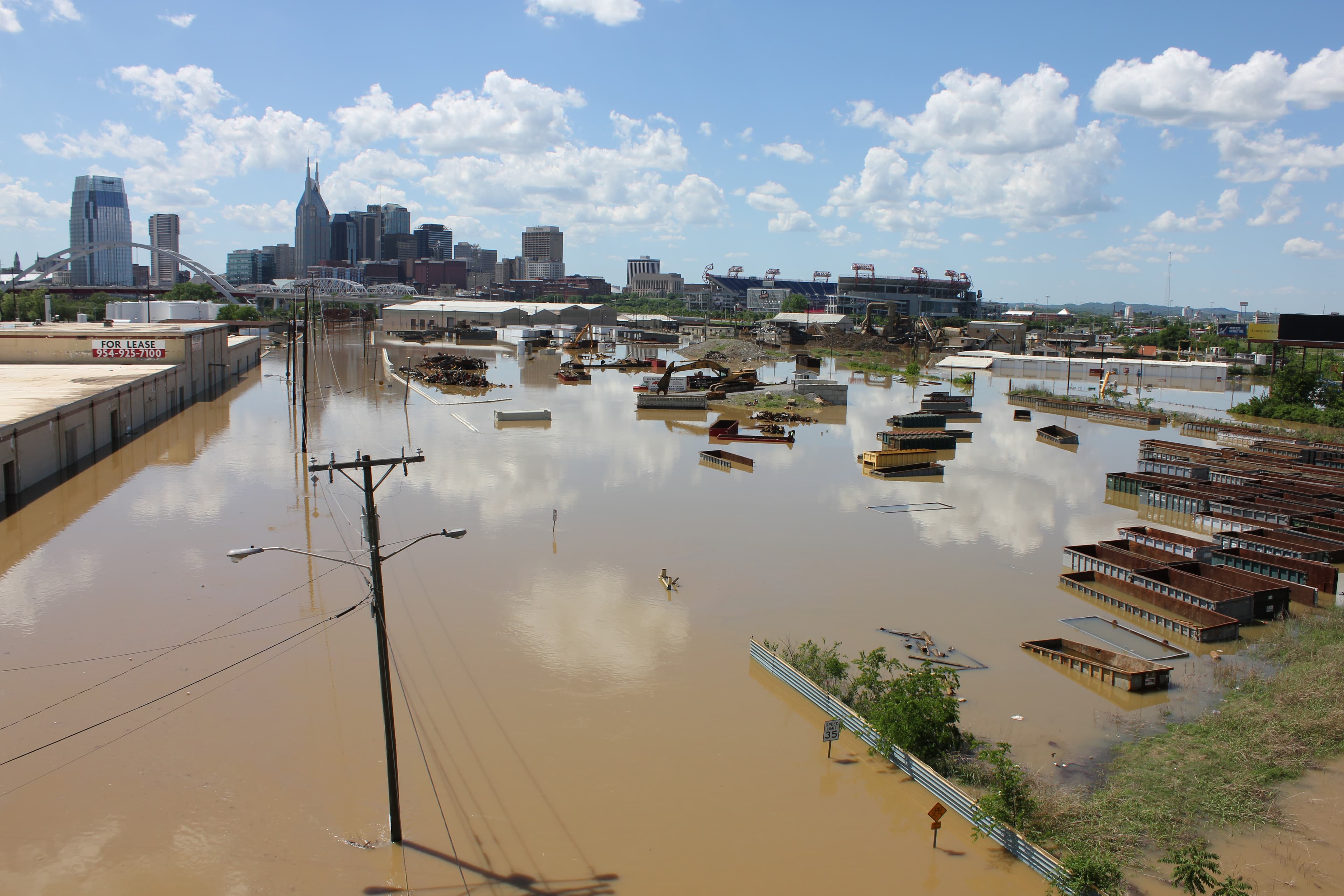
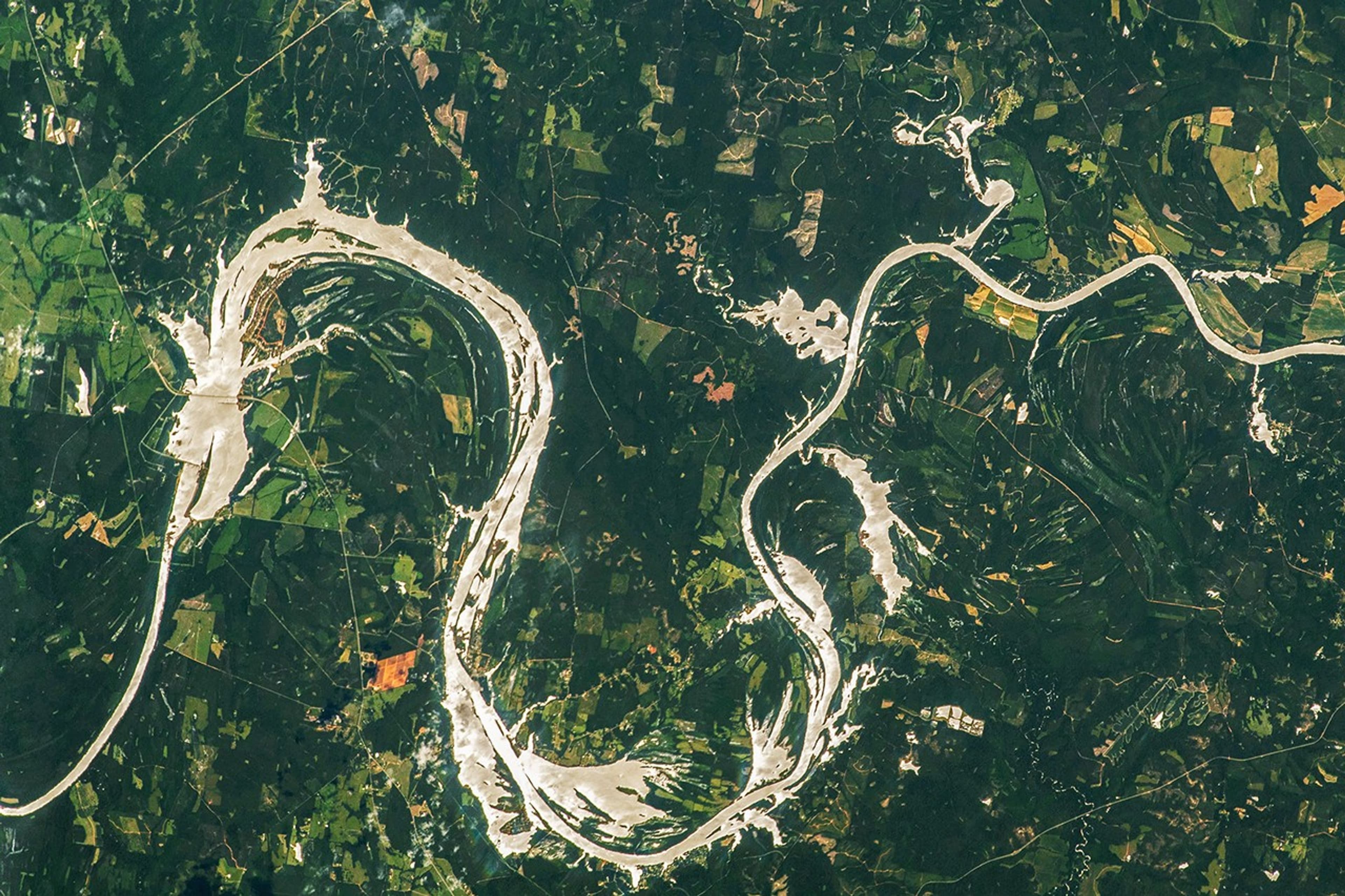
More than 548,600 Alabamians have filed FEMA flood damage insurance claims since 2000. That's the backdrop for any rural land purchase in this state: rivers, creeks, and low-lying terrain that have flooded repeatedly, and a federal insurance program with $12.3 billion of exposure across roughly 58,500 active Alabama policies. Knowing where your parcel sits on the flood map is the difference between a manageable annual premium and a property that's effectively unbuildable.
How FEMA Flood Maps Work
FEMA produces Flood Insurance Rate Maps (FIRMs) that divide land into zones based on flood probability. These maps are the official basis for flood insurance requirements and local development permits across all 433 NFIP-participating communities in Alabama.
The maps are available for free at FEMA's Flood Map Service Center (msc.fema.gov) and through Alabama's own interactive tool at AlabamaFlood.com, which layers FEMA floodplain data on a searchable map by address or county. AlabamaFlood.com also shows Water Surface Elevations and flood depth grids, which are useful for evaluating specific parcels.
Key Zone Designations
Zone AE: The most important zone for buyers to understand. AE designates areas with a 1-percent annual chance of flooding (commonly called the "100-year floodplain") where FEMA has calculated a Base Flood Elevation (BFE). If your parcel is in Zone AE and you have a federally backed mortgage, flood insurance is mandatory. Development here requires special permits and hydraulic engineering analysis.
Zone A: Similar to AE but without a published BFE. These areas still carry high flood risk and trigger insurance requirements; FEMA simply hasn't calculated the exact water surface elevation.
Zone X (shaded): Moderate flood hazard. These areas fall between the 100-year and 500-year floodplain boundaries. Insurance is not required, but flood risk is not zero.
Zone X (unshaded): Minimal flood hazard outside the 500-year floodplain. Still worth verifying, as localized drainage issues can cause flooding even in unshaded X zones.
Floodway: A subset within Zone AE representing the channel and adjacent land that must remain clear to carry floodwaters. Development in a floodway is extremely restricted; any construction must demonstrate "no rise" in flood elevations, certified by a licensed engineer.
Alabama's Flood-Prone Regions
Alabama has three main hydrological systems that drive flood risk: the Tennessee River basin in the north, the Black Warrior and Cahaba systems in the central region, and the Mobile River delta near the Gulf Coast.
Northern Alabama (Madison County and surroundings): The Tennessee River and its tributaries make Madison, Limestone, and Morgan counties particularly flood-prone. A risk assessment found approximately 29,160 properties at flood risk in those three counties combined, nearly double the number FEMA's maps show. Huntsville's urban waterways, including Huntsville Spring Branch and Pinhook Creek, have a documented history of repeated flooding. If you're focused on this region, our Madison County land-buying guide covers the broader due-diligence picture; for flood specifically, evaluate parcels near any creek or drainage channel, not just those touching the Tennessee River itself.
Central and South Alabama: The Alabama, Tombigbee, and Coosa rivers drain a large swath of central and south Alabama. Low-lying farm and timber land near these rivers can carry significant flood exposure, sometimes outside currently mapped zones.
Coastal and Gulf-influenced counties: Proximity to Mobile Bay and Gulf weather patterns adds hurricane-driven flooding risk in the southernmost counties.
Who Regulates Floodplains in Alabama?
The key state agency is ADECA (Alabama Department of Economic and Community Affairs), not ADEM. ADECA's Floodplain Management Unit coordinates the NFIP in Alabama, assists communities with floodplain ordinance adoption, and is the resource for questions about development permits and map changes.
Local floodplain administrators (typically employees in county or city engineering or planning departments) issue development permits for work within mapped floodplains. Any construction, grading, or fill activity within a FEMA floodplain requires a permit and, in a floodway, a professional engineer's "no rise" certification.
ADEM's role is water quality permitting (stormwater and wastewater NPDES permits), which is a separate but sometimes overlapping concern for land development.
Flood Insurance: What It Costs in Alabama
Alabama has over 58,500 active NFIP policies covering more than $12.3 billion in property. For buyers purchasing in a Special Flood Hazard Area (Zone A or AE), understanding insurance costs is essential before committing to a parcel.
Current NFIP premiums in Alabama range from approximately $291 to $7,385 per year, with an average around $1,500 annually. FEMA's Risk Rating 2.0 methodology, introduced in 2021, ties premiums more directly to individual property risk rather than just zone designation, which means some properties in the same flood zone can have very different premiums.
Premiums have been increasing at 5 to 15 percent annually, and properties with higher risk profiles under Risk Rating 2.0 can see larger jumps. This trajectory matters for long-term financial planning. A property with a manageable $1,200 annual premium today could cost significantly more in 10 years.
Elevation Certificates Can Reduce Premiums
An elevation certificate documents your property's elevation relative to the Base Flood Elevation. If your land or structure sits above the BFE, an elevation certificate can substantially reduce flood insurance premiums.
In Alabama, elevation certificates typically cost $500 to $800 for a standard property. When the certificate confirms elevation above the BFE, buyers have achieved 50 to 90 percent reductions in annual premiums, with documented savings of $1,000 to $3,000 per year. Even at $700 for the certificate, a $2,000 annual savings pays back the cost in under five months.
If you're buying land in or near a Zone AE area, getting an elevation certificate before closing is worth discussing with your surveyor.
The LOMA Process: Removing a Property from the Floodplain
If your property has been mapped into a Special Flood Hazard Area but sits on naturally high ground above the Base Flood Elevation, you may qualify for a Letter of Map Amendment (LOMA).
A LOMA is FEMA's official determination that a specific property or structure is not actually in the SFHA, despite appearing on the flood map. Once FEMA issues a LOMA, the mandatory flood insurance requirement is removed for that property.
To apply, you typically need:
- An elevation certificate prepared by a licensed land surveyor or engineer
- Documentation of the property's natural ground elevation
- Submission through FEMA's online eLOMA or LOMC portal
FEMA issues its determination within 60 days of receiving complete documentation. Alabama is a Cooperating Technical Partner with FEMA, meaning the state assists in reviewing map change applications, which can speed the process along.
A LOMA won't apply to every situation. If your land is genuinely low-lying, the application will be denied. But for properties inadvertently caught by a flood map boundary, it's a real option worth pursuing.
What to Do Before You Buy
Step 1: Check the flood map. Search your parcel at AlabamaFlood.com or FEMA's Flood Map Service Center. Note the zone designation and whether any portion falls in the floodway.
Step 2: Get the parcel's flood history. Contact the local floodplain administrator (county engineering or planning department) to ask about historical flood events affecting the property and any existing flood insurance claims.
Step 3: Request an elevation certificate. If the parcel is in or near Zone AE, commission an elevation certificate before closing. It informs insurance cost estimates and may support a LOMA application.
Step 4: Get insurance quotes. Contact NFIP-authorized agents in Alabama for actual premium estimates based on the specific parcel address. Don't rely on averages; individual property risk varies considerably under Risk Rating 2.0.
Step 5: Check development permit requirements. If you plan to build, consult with the local floodplain administrator early. Permitting, elevation requirements, and engineer certifications can add cost and time to any construction project in or near a floodplain.
If a parcel shows up red on AlabamaFlood.com, the more useful question isn't "is this in a flood zone" but which portion is, and how much. LandWise intersects the parcel boundary with FEMA NFHL data and reports the percentage of the parcel in each zone, the SFHA designation, base flood elevation where available, and floodway coverage. A parcel that's 95% Zone X with a creek-side strip in Zone AE is a very different purchase than one that's 80% AE with a small high-spot. Both read as "flood zone parcel" on a coarse map; only one is buildable without major elevation work.
What we'd actually do first
If you're seriously considering a parcel in or near a mapped floodplain, do two things before anything else: pull the parcel-specific zone breakdown so you know what fraction is buildable, and get a single insurance quote tied to the actual address. Those two numbers turn flood zone from an abstract risk into a concrete budget line. Everything else (LOMA, elevation certificates, floodway permits) is a response to what those two numbers tell you.