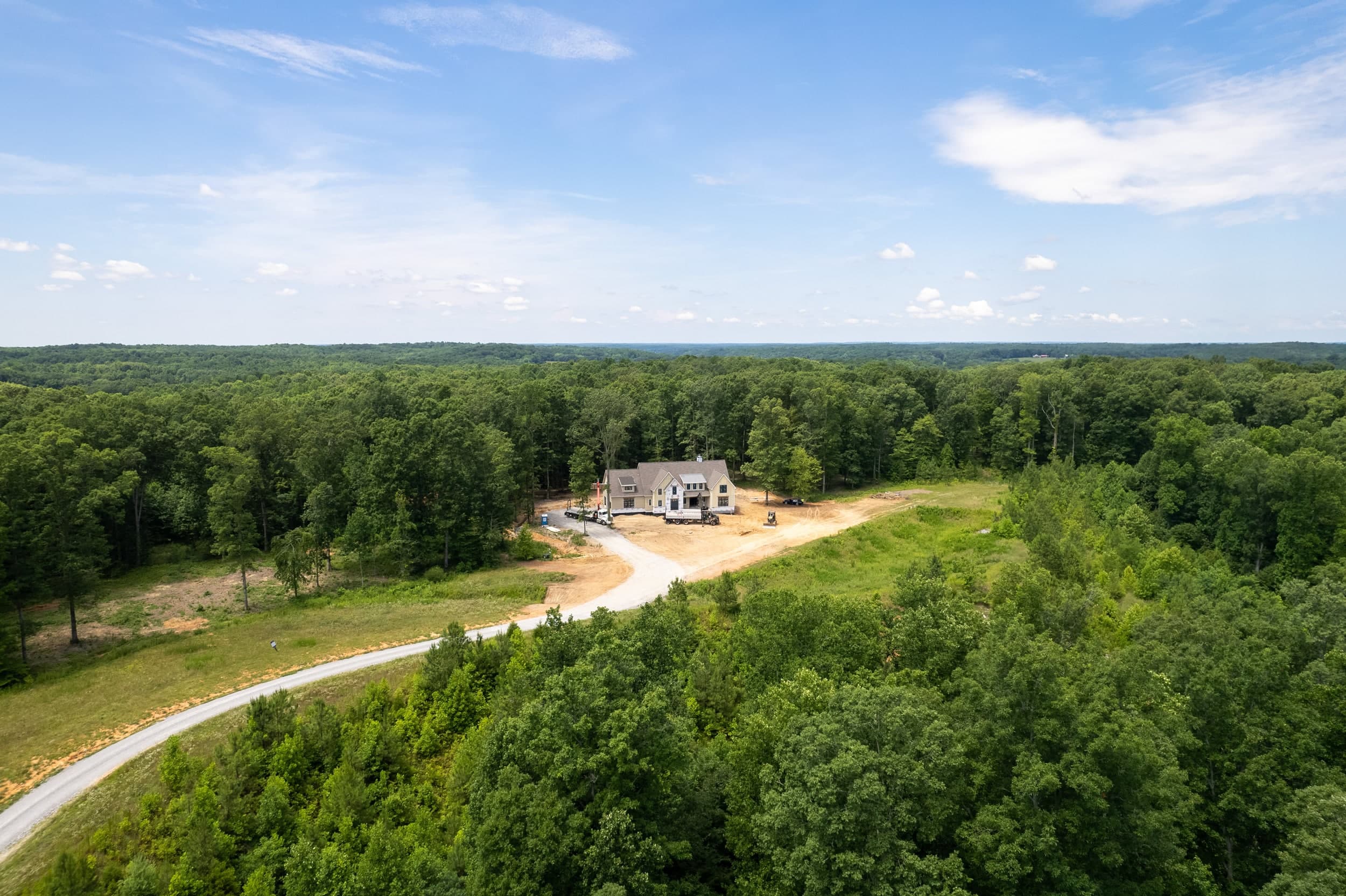
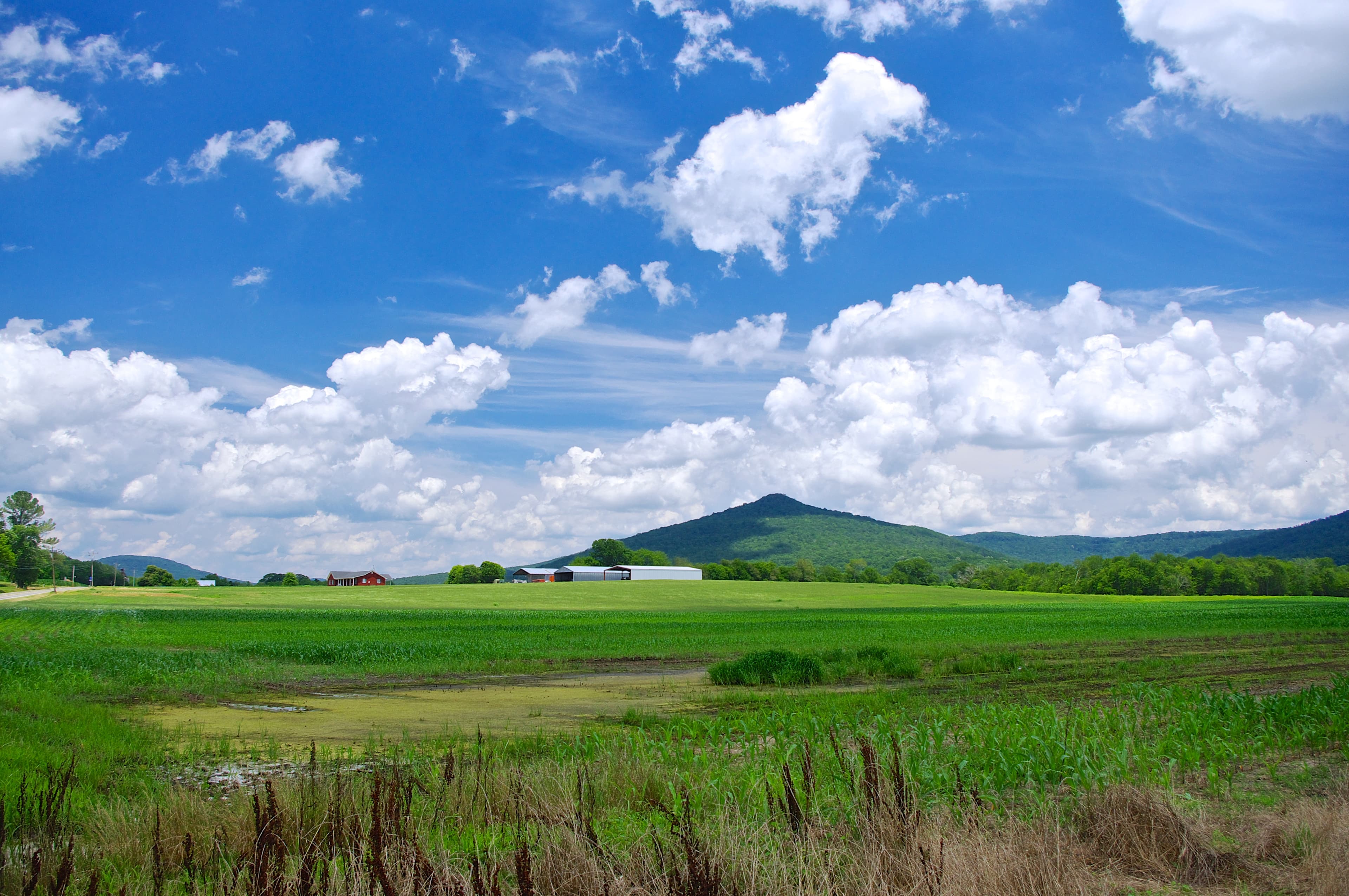
A 3-acre parcel in DeKalb County listed at $45,000 looks like a deal, right up until the contractor walks the site and tells you the grade change alone will run $35,000 in earthwork before a shovel touches the foundation. Sloped land in Alabama is priced to move, and for good reason: the hidden costs show up later.
That's not a reason to avoid hilly parcels. North Alabama has some genuinely beautiful terrain, and slopes create privacy and views that flat lots can't match. But you need to go in with clear numbers on what building on that terrain actually costs, and what the state's patchwork of building codes actually requires.
Where Alabama Gets Steep
Alabama's significant elevation changes are concentrated in the northeastern third of the state, organized into three distinct zones:
Ridge and Valley Region: The southernmost extension of the Appalachian mountain system runs through Etowah, Talladega, St. Clair, Jefferson, and Cherokee counties. Long ridges run northeast-southwest with steep northwest faces and more gradual southeastern slopes. Elevations vary dramatically across short distances.
Cumberland Plateau: Walker, Winston, Marshall, DeKalb, and Jackson counties sit on the plateau, with elevations ranging from 400 to 1,800 feet. The terrain here features steep mountain-sides, deep coves, and narrow valleys. That kind of topography produces spectacular parcels with serious access and grading challenges.
Madison County's Limestone Ridges: Monte Sano, Wade Mountain, Green Mountain, and Keel Mountain surround the Huntsville metro. These limestone-capped ridges come with karst complications (sinkholes, springs, and rapid stormwater drainage) layered on top of the standard slope issues. Heavy clay soils in the lower elevations add drainage problems of their own.
Cheaha Mountain in Cleburne County tops out at 2,413 feet, Alabama's highest point, with stony silt loam soils and quartzite bedrock. Septic systems in that area frequently require engineered designs, and blasting is sometimes necessary for even basic earthwork.
What Building Codes Actually Require on Slopes
Alabama's building code situation is more complicated than most states, and it matters a lot for sloped parcels.
The state adopted a residential building code based on the 2015 International Residential Code (IRC) under Alabama Senate Bill 315, signed in 2010. Code adoption authority shifted in 2024 to the Alabama Home Builders Licensure Board (HBLB) under Act 2024-443, and beginning January 1, 2027, all licensed residential builders in Alabama must comply with whatever new code the HBLB adopts (per Alabama Code § 34-14A-12). Local codes in place before that date are grandfathered.
Here's the catch: code enforcement is entirely local. Many rural Alabama counties have no building code enforcement in unincorporated areas. Jackson County, which sits in terrain that's genuinely challenging, is one of them. Jackson County explicitly confirms it requires no building permits for residential construction outside city limits. In counties without enforcement, the state code applies legally, but no inspector will ever verify it.
For licensed builders working in counties with enforcement, the IRC sets specific slope rules:
- IRC § R403.1.5: The bottom surface of footings must not slope more than 10 percent (1:10 rise-to-run).
- IRC § R403.1.7: Structures located on or adjacent to slopes steeper than 33.3 percent (1:3) require special engineering analysis for the foundation and its relationship to the slope.
- IRC § R401.3: Grade must fall a minimum of 6 inches within the first 10 feet from the foundation for drainage.
For any construction project disturbing 1 acre or more of land, ADEM requires coverage under its Construction Stormwater General Permit (Permit No. ALR100000, current version effective April 1, 2026) under ADEM Administrative Code Chapter 335-6-12. Projects near waterbodies listed as impaired for turbidity face additional review requirements. You'll need a Construction Best Management Practices Plan (CBMPP) certified by a licensed engineer or credentialed erosion-control professional.
Foundation and Site Preparation Costs
The cost difference between a flat lot and a steep one compounds quickly. National grading estimates run $15,800 to $44,535 per acre, and a steep hillside can push site prep to $30,000–$80,000 or more before any foundation work begins. Rocky terrain in places like Cleburne or DeKalb County adds blasting costs of $40–$100 per cubic yard on top of standard excavation.
Retaining walls are often unavoidable on lots with more than a modest grade change. Expect $40–$200 per linear foot depending on material and height. Walls taller than 3 feet typically require structural engineering review; anything over 4 feet usually needs steel reinforcement.
Foundation choice matters on slopes. A standard slab-on-grade only works on relatively level, compacted ground. A stem wall foundation (perimeter walls of varying height) is the usual solution for sloped lots. It lets the foundation step down with the grade rather than forcing the lot to be cut completely flat. Stem walls run $6–$18 per square foot, and labor costs increase by 50% or more compared to a flat-lot pour.
Septic Systems Change on Steep Ground
Standard gravity-fed septic systems assume the drain field sits downhill from the tank. When the terrain works against that, or when the slope is too severe, the system needs to compensate.
Alabama's septic rules are set by the Alabama Department of Public Health (ADPH) under Alabama Administrative Code Chapter 420-3-1. Two slope thresholds matter:
- Ala. Admin. Code r. 420-3-1-.30: Innovative effluent disposal systems (EDS) are not permitted when slope in the discharge area exceeds 12 percent. Above that threshold, you're looking at a conventional onsite sewage system (OSS) instead.
- Ala. Admin. Code r. 420-3-1-.58: When conventional drain field trenches are on slopes greater than 25 percent, minimum trench spacing increases per the requirements in Table 8 of the regulations.
Lots where the drain field must be uphill from the tank require pump dosing, which adds $3,000–$8,000 to the system cost. Distribution lines on slopes should follow the contour of the land rather than running directly uphill or downhill, which requires more careful siting and sometimes a larger footprint.
Limestone-heavy soils in Madison County present a separate issue: bedrock close to the surface limits effective soil depth for drain fields. If the soil survey shows shallow depth to restrictive layer, the county health department may require an engineered system or deny the permit entirely.
For a deeper look at how soil type interacts with septic feasibility across Alabama, see the post on soil types and septic systems in Alabama.
What to Know Before You Make an Offer
The challenge with sloped parcels is that the critical variables (actual grade change, soil depth, drainage patterns) aren't visible from a listing photo or a county tax map. Two adjacent parcels with the same listed acreage can have dramatically different site prep costs based on how the slope is distributed.
Before ordering a topographic survey or hiring an engineer, knowing a parcel's mean slope, maximum slope, and how the grade is distributed across the property gives you a quick screen for whether the site prep math is even feasible at your budget. LandWise calculates mean slope, maximum slope, and a terrain classification (flat through steep) from elevation data, and generates an access-viability grade that flags when slope creates practical challenges for road access or construction staging. It also pulls SSURGO soil data (drainage class, depth to restrictive layer, and hydrologic group), which directly informs whether the lot can support a standard septic system or will require an engineered alternative. That combination tells you which parcels are worth paying for a full site evaluation before you're under contract.
The best sloped parcels in Alabama reward buyers who do the upfront homework. The worst ones have absorbed someone else's $40,000 in hidden site costs into a price that still looks like a deal.