A failed perc test on a Black Belt parcel in Hale County can turn a $5,000 conventional septic into a $20,000 engineered alternative, plus $200 to $500 a year in service contracts for the rest of the home's life. Alabama's soils swing from karst-pocked Decatur clays in the Tennessee Valley to expansive Sumter clays in the Black Belt to leaky Baldwin County sands, and which one sits under your drainfield decides whether you can build at all.
Who Regulates Septic Systems in Alabama
The Alabama Department of Public Health (ADPH) oversees all onsite sewage disposal in the state through its county health departments. The governing rules are found in Alabama Administrative Code Chapter 420-3-1: Onsite Sewage Treatment and Disposal. The Alabama Onsite Wastewater Board (AOWB), created under Code of Alabama §34-21A, licenses the contractors who install and service these systems.
Before any new septic system can be installed, the county health department must issue a Permit to Install. After the system passes inspection, the department issues an Approval for Use; no structure may be legally occupied without it. Most permits also require reserving a 100 percent expansion area adjacent to the primary drainfield so a replacement system can be installed if the original fails.
Every potential site receives a formal rating: Slight, Moderate, Severe, or Extreme Limitation. That rating, which is based on soil evaluation results, determines what system type is allowed and how large the drainfield must be.
Alabama's Major Soil Regions and What They Mean for Septic
Alabama's soils vary dramatically by physiographic region. Knowing where your land sits on the map gives you a realistic preview of what a soil evaluation is likely to find.
Tennessee Valley and Limestone Uplands (North Alabama)
The Tennessee Valley spans counties like Limestone, Lawrence, and Morgan. The dominant soils here are the Decatur and Dewey series: red, clayey soils with silt loam surface layers that are generally well-drained in upland positions.
However, north Alabama sits on karst limestone terrain. Sinkholes and cave conduits can channel wastewater directly to groundwater with virtually no natural filtration. The Alabama Geological Survey estimates that 10 to 20 sinkholes form in or near the Huntsville area every year. On karst parcels, conventional systems may require additional engineered treatment to prevent contamination of the underlying aquifer.
Appalachian Plateau (Northwest Alabama)
In flatter portions of the plateau, Nauvoo, Hartsells, and Wynnville soils are characterized by loamy subsoils and fine sandy loam surfaces. These soils offer the most favorable conditions in the region for standard septic installation. In rugged, dissected terrain the picture changes: Montevallo and Townley soils derived from shale have clayey subsoils and are more limiting.
Piedmont Plateau (East-Central Alabama)
The Piedmont covers a broad swath of east-central Alabama, including Talladega, Cleburne, and Clay counties. The dominant series here are Madison, Pacolet, and Cecil soils: red, clayey subsoils with sandy loam to clay loam surfaces. Slow percolation is common, and the rolling to steep topography creates additional site constraints. Many Piedmont parcels end up with Moderate to Severe ratings, making alternative system design a real possibility.
The Black Belt (Central Alabama)
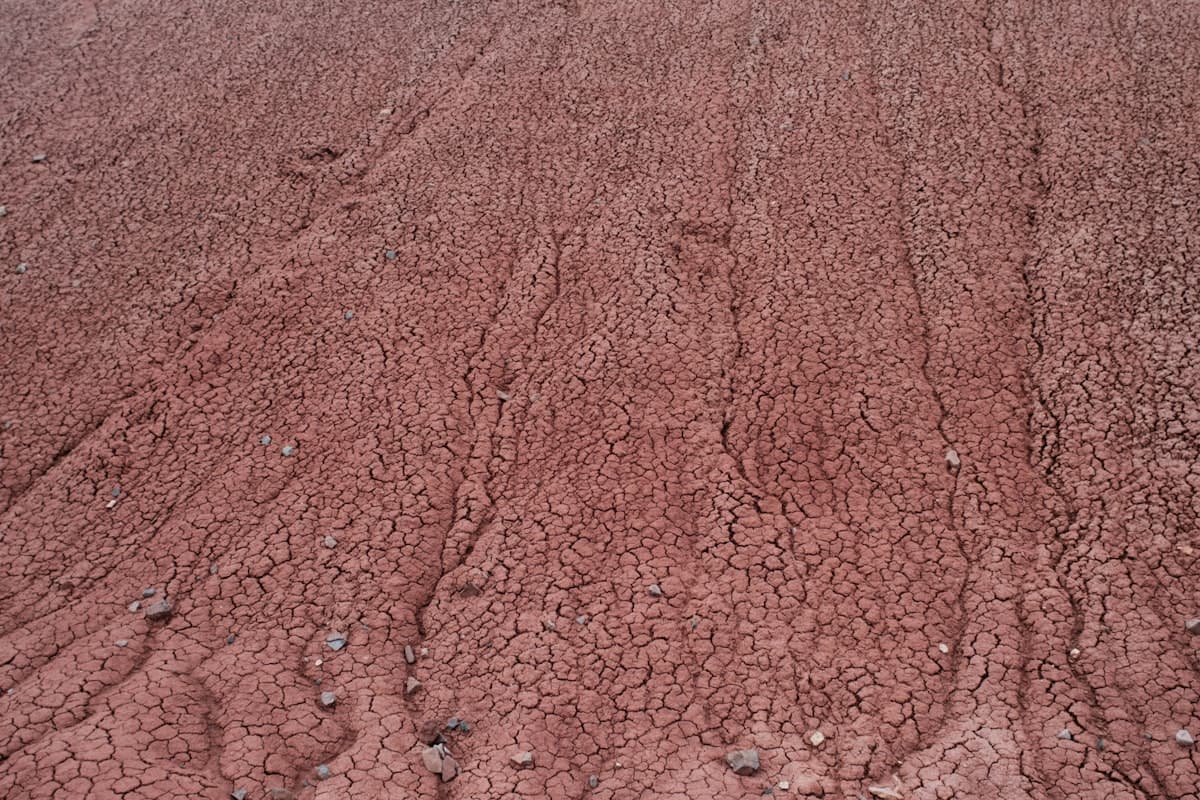
The Black Belt is a crescent-shaped band of highly expansive smectitic clay running through counties such as Hale, Lowndes, Perry, and Wilcox. The dominant series include Sumter, Oktibbeha, and Mayhew. These soils swell when wet and crack when dry; when saturated, percolation is essentially zero. Conventional drainfields fail because the soil cannot absorb effluent, causing wastewater to surface rather than percolate. If you are evaluating a parcel anywhere in the Black Belt, budget for an engineered system from the start.
Coastal Plain (South Alabama)
The Coastal Plain covers roughly the southern half of the state and is the most varied zone for septic feasibility.
- Upper Coastal Plain: Smithdale, Luverne, and Savannah soils have loamy to clayey subsoils. Some have a fragipan, a dense and brittle subsurface layer that restricts drainage and can drive Moderate to Severe limitation ratings.
- Lower Coastal Plain: Dothan, Orangeburg, and Ruston soils are loamy sands and fine sandy loams. Alabama's state soil, Bama fine sandy loam, falls here and generally supports conventional septic on well-drained upland sites.
- Coastal and Near-Coastal Areas (Baldwin and Mobile Counties): Sandy soils near the coast can be too permeable. Water moves so quickly that waste is inadequately filtered before reaching groundwater. High seasonal water tables compound the problem. The ADPH increasingly requires Performance-Based Treatment Systems (PBTS) in these areas, which provide advanced treatment and disinfection before effluent reaches the drainfield.
The Perc Test Process in Alabama
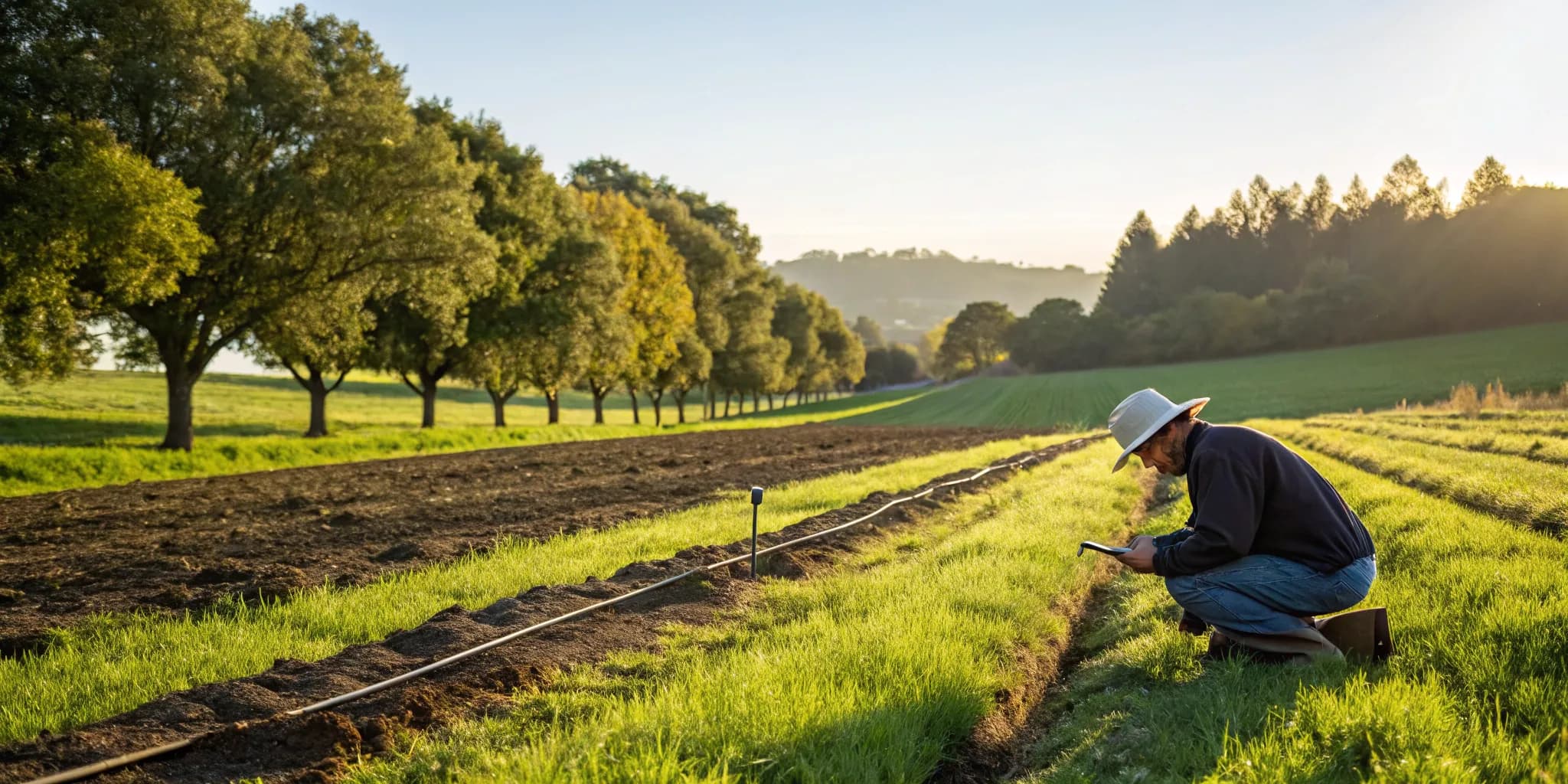
Before the ADPH will issue a Permit to Install, the site must be evaluated by a licensed professional. The standard procedure involves hand-augering soil borings to a depth of six feet at multiple locations across the proposed drainfield. The evaluator documents each soil layer, looking for texture, color, drainage characteristics, and mottling (rust-colored flecks that indicate a seasonally high water table).
Percolation testing measures how fast water moves through the least-permeable soil layer within 18 inches below the intended trench bottom. Results are expressed in minutes per inch (MPI):
- 1 to 60 MPI: Generally acceptable for a conventional system; a slower rate requires a larger drainfield area
- Faster than 1 MPI: Soil may not filter waste adequately; engineered treatment often required
- Slower than 60 MPI: Conventional drainfield typically not feasible; alternative system required
Perc testing in Alabama runs around $334 on average, though costs in some North Alabama markets can reach $600 to $700 when full geotechnical services are included. The test fee is a small fraction of total system cost, and it is money well spent before purchase.
The hard question isn't "will this parcel perc." It's whether the soil profile makes a conventional system feasible at all before you pay $334 to find out. LandWise pulls SSURGO drainage class, hydrologic group, water-table depth, and depth-to-restrictive-layer for the specific parcel, then assigns a perc-risk rating (high/moderate/low) and a septic-feasibility verdict (suitable/marginal/unsuitable). It doesn't replace an ADPH site evaluation, but it tells you which parcels are worth ordering one for and which to walk away from. For the perc test process and Tennessee-side comparison, see understanding perc tests in Tennessee.
What Happens When Conventional Septic Won't Work
A failing perc test does not automatically make a parcel unbuildable, but it does change the cost equation significantly. Alabama authorizes several alternative system types:
- Aerobic Treatment Units (ATUs): A blower injects air into a second treatment chamber, producing higher-quality effluent that most soils can handle. ATUs require at minimum twice-yearly inspections by a licensed operator. Installed cost: $10,000 to $20,000.
- Mound Systems: The drainfield is constructed above grade using imported sand and gravel, placing the effluent distribution zone in suitable material above the restrictive soil layer. Installed cost: $10,000 to $22,000 or more.
- Drip Irrigation Systems: Effluent is distributed through buried drip emitters in timed, small doses. Slow, controlled release allows even marginal soils to handle the hydraulic load.
- Sand Filter Systems: Effluent passes through a constructed sand medium before reaching the soil, providing additional treatment where natural filtration is inadequate.
All engineered systems add ongoing maintenance costs. ATU service contracts typically run $200 to $500 per year. Factor these recurring expenses into your ownership budget.
Using the USDA Web Soil Survey as a Starting Point
The USDA NRCS Web Soil Survey at websoilsurvey.nrcs.usda.gov provides county-level SSURGO soil data for all Alabama counties. Its "Suitability for Septic Tank Absorption Fields" layer uses a three-tier system:
- Not Limited (green): Soil properties suggest a conventional system is feasible
- Somewhat Limited (yellow): Identifiable limitations exist; engineering solutions may be viable
- Very Limited (red): Severe soil restrictions; alternative system typically required
This is an excellent free screening tool, and the Alabama Cooperative Extension Service recommends consulting it before purchasing any rural parcel. Keep in mind that the Web Soil Survey operates at a coarse scale; it is not a substitute for an on-site evaluation by a licensed professional, which the ADPH requires before issuing any permit.
Financial Assistance for Difficult Sites
If you face challenging soil conditions, the USDA Rural Decentralized Water Systems Grant Program offers sub-grants or low-interest loans (1 percent fixed rate, 20-year term, up to $15,000 per household) through qualifying nonprofits for homeowners installing or repairing individual wastewater systems. Your local USDA Rural Development office and county Extension agent can confirm current eligibility and funding availability.
What we'd actually do first
Pull SSURGO data for the parcel before scheduling a site visit; if drainage class is "very poorly drained" or the parcel sits squarely in the Black Belt, assume an engineered ATU or mound system and price the parcel accordingly. If the screening looks workable, make the purchase contingent on an ADPH-approved soil evaluation and confirm the lot is large enough for both the primary drainfield and the required 100 percent expansion area before signing. For comparable Coastal Plain parcels, also check our Madison County land buyer's guide.