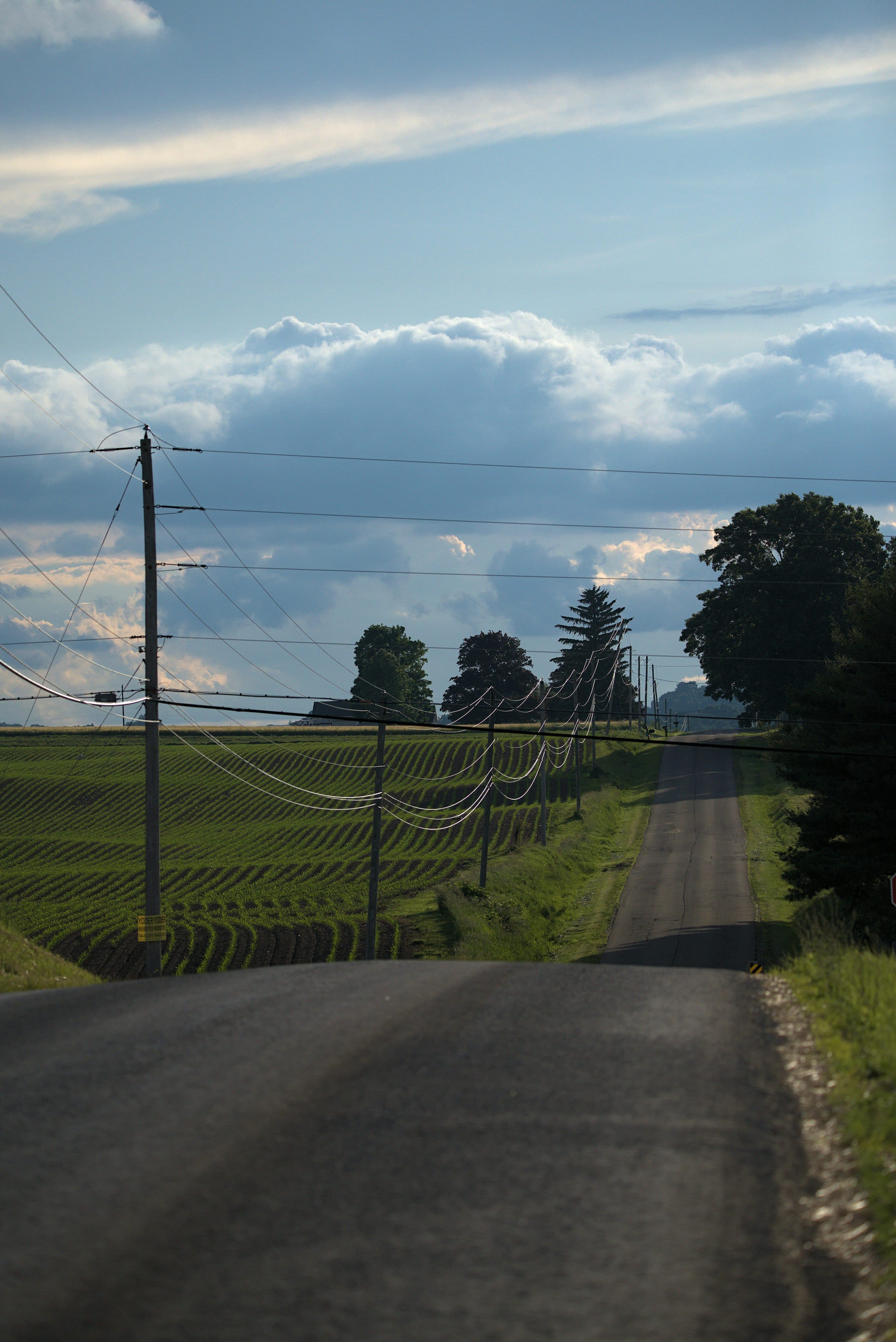

A 1,000-foot overhead line extension on rural Tennessee land can run $5,000 to $25,000 before a single appliance gets plugged in, and underground installation through rocky terrain often doubles that. Raw land rarely comes with power at the road; it comes with a quote from a co-op engineer that you won't see until weeks after closing.
Before you close on a rural Tennessee parcel, understanding how the state's electric infrastructure works (and what it will take to connect your property) is one of the most important pieces of due diligence you can do.
How Tennessee's Electric System Works
Tennessee operates under a unique public power model. The Tennessee Valley Authority (TVA) generates and sells wholesale electricity, but it does not serve individual homes or businesses. Instead, TVA distributes power to 153 local power companies (a mix of electric cooperatives and municipal utilities) which handle all retail service, billing, and infrastructure.
The Tennessee Electric Cooperative Association (TECA) represents 23 power distributors across the state, including well-known cooperatives like Middle Tennessee Electric (the largest co-op in the TVA region), Sequachee Valley Electric Cooperative, Duck River EMC, and Cumberland EMC. Each cooperative serves a defined territory, so the first step for any rural property is identifying which co-op or municipal utility covers your land.
If you're worried about whether a parcel is even reachable for grid power, the more useful question is how far away the nearest line is. LandWise reports the distance in meters from the parcel to the closest power line and a status flag (available under 100m, likely under 500m, unlikely beyond 1km), so you can see whether you're looking at a $5,000 extension or a $25,000 one before you write an offer. It won't tell you the transformer location or quote a price, but it gives you the single biggest cost variable up front.
These cooperatives are member-owned and not-for-profit. When you establish service, you become a member, typically for a $5 membership fee. Rates are set to cover costs rather than generate profit, and TVA's wholesale pricing helps keep Tennessee residential electricity rates lower than roughly 75% of the top 100 U.S. utilities.
What It Costs to Extend Power Lines
The cost to bring electricity to a rural Tennessee property depends primarily on distance from existing infrastructure, terrain, and whether you choose overhead or underground lines.
Typical cost ranges:
- Overhead power lines: $5 to $15 per linear foot
- Underground power lines: $10 to $25+ per linear foot
- Utility pole installation: $1,200 to $5,600 per pole, with rural spacing of roughly 300 feet between poles
- New transformer (if needed): $3,000 to $20,000+ installed
For a property 500 feet from the nearest power line, you might pay $2,500 to $7,500 for an overhead extension. At 1,000 feet, costs can reach $5,000 to $25,000 or more, especially if underground installation or a new transformer is required.
Every Tennessee cooperative has its own line extension policy. For example, Webster Electric Cooperative provides the first 200 feet free for permanent residential service, then charges $5 per foot up to 1,000 feet and $10 per foot beyond that. Other cooperatives structure their fees differently; some charge flat engineering fees, while others require a full upfront deposit based on estimated construction costs. The only way to get an accurate number is to contact your specific cooperative's engineering department.
The Process: From Raw Land to Energized Meter
Getting power to a rural Tennessee property follows a general sequence, though details vary by cooperative:
-
Identify your utility provider. Service territories don't overlap; each area has one designated provider. Your cooperative can confirm coverage by property address or coordinates.
-
Contact the co-op's engineering department. Provide proof of ownership, a government-issued ID, and the property's 911 address. Cooperatives like Meriwether Lewis EC recommend reaching out at least two weeks before you need service.
-
Get an engineering assessment. The co-op sends an engineer to evaluate the property, map the line route, and produce a cost estimate.
-
Secure easements and clear the right-of-way. If the power line must cross a neighbor's property, you are responsible for obtaining a written easement; the cooperative will not do this for you. You must also clear a 40-foot right-of-way (20 feet on each side of the line). In wooded areas, this clearing alone can be a significant expense. See our Tennessee land easements guide for what to negotiate.
-
Pay fees and sign agreements. All construction charges (including connection fees, deposits, meter fees, and line extension costs) must typically be paid before work begins.
-
Pass electrical inspection. Tennessee uses the CORE (Centralized Online Regulatory Electronic) inspection system for all electrical work. Your electrician installs the service panel and meter base, then schedules inspections through CORE.
-
Meter installation. After passing inspection, the co-op installs the meter and energizes the line.
Temporary construction power is also available if you need electricity during the building phase. This requires a temporary service pole installed by a licensed electrician, and most cooperatives require it to be within 125 feet of the nearest existing pole. Expect to pay $1,000 to $4,000 for a metered temporary setup, and note that some co-ops charge higher per-foot rates for non-permanent service.
Common Challenges to Watch For
Several factors can significantly increase costs or complicate the process:
-
Distance from the nearest transformer. This is the single biggest cost driver. A property a quarter-mile from existing infrastructure could face $10,000 to $30,000+ in extension costs.
-
Easement negotiations. If a neighbor refuses to grant an easement, your options are limited. Tennessee does have a statute (TCA 54-14-102) that allows truly landlocked property owners to condemn a 25-foot easement across intervening land for utility access, but this requires legal action and only applies if you have no other access.
-
Steep terrain, rocky ground, or creek crossings. These increase construction costs dramatically and may require underground installation at 2 to 3 times the overhead cost.
-
Timing. Between engineering assessments, easement negotiations, and construction scheduling, the process can take weeks to months. Middle Tennessee Electric notes that service requests submitted more than 30 days in advance may be voided, so timing your request matters.
The Off-Grid Alternative: Solar in Tennessee
If extending power lines is prohibitively expensive (or if you prefer energy independence), off-grid solar is a legal and increasingly popular option in Tennessee. The state does not require homes to be connected to the electric grid, and solar panels can be installed without restriction.
However, Tennessee's solar economics for grid-connected systems are less favorable than many states. TVA's Dispersed Power Production (DPP) program pays only the avoided cost rate (approximately 1.8 cents per kWh) for solar energy fed back to the grid. Compare that to the roughly 12 cents per kWh you pay for grid power, and it is clear that selling solar back provides minimal return. The DPP program also requires a $250 application fee and a $500 interconnection fee.
For off-grid systems, the economics can make more sense when the alternative is a $20,000+ line extension. A solar panel array with battery storage can power a well pump, refrigerator, lighting, and basic appliances. The federal Investment Tax Credit (currently 30%) helps offset installation costs. Keep in mind that Tennessee does not exempt solar panels from property tax on vacant land, so your assessment may increase.
Multiple Tennessee-based installers specialize in off-grid systems, and the technology has become significantly more reliable with modern lithium battery banks.
What to Check Before You Buy
Before purchasing rural Tennessee land, take these steps to understand your electricity situation:
- Identify the serving cooperative and call their engineering department for a preliminary cost estimate
- Ask about line extension policies; some co-ops offer free footage allowances, others do not
- Check the distance from your building site to the nearest power line or transformer
- Verify easement access; will the line need to cross neighboring properties?
- Assess terrain between the nearest infrastructure and your build site (hills, creeks, and dense forest all increase costs)
- Consider the off-grid math: if line extension costs exceed $15,000 to $20,000, a solar-plus-battery system may be competitive
- Factor electricity costs into your land budget: a $30,000 parcel with a $25,000 line extension is really a $55,000 investment
What we'd actually do first
Before you write an offer, pull up the parcel and measure the distance from the building site to the nearest existing power line on a satellite image; if it's more than about 500 feet, get the serving cooperative's engineering department on the phone the same day. Ask three questions: their per-foot overhead and underground rates, whether your build site requires a new transformer, and whether any neighboring parcel will need to grant a written easement. The answers determine whether the property's listing price is the real price or just a down payment on the real price.