Citronelle Field in Mobile County has produced roughly 160 million barrels of oil since its 1955 discovery, and most of those wells sit on land where the surface owner doesn't hold the minerals beneath. In much of north and central Alabama, mineral rights were severed a century ago by railroad, coal, and timber companies and have passed through generations without ever being disclosed to buyers who assumed they owned the whole property.
A mineral owner in Alabama may have the legal right to bring equipment onto your land, dig roads, and extract resources without your permission. The mineral chain of title sits in a separate set of records from the surface chain, and a standard owner's title policy generally won't surface what's there.
What Mineral Rights Are and How Alabama Law Treats Them
Mineral rights are a property interest in the subsurface resources of a parcel of land. When a single owner holds both the surface and the minerals, the property is described as a unified or fee-simple estate. When someone sells or retains the minerals separately from the surface, the estate is "severed," and two separate owners hold legally distinct interests.
Alabama follows the mineral estate dominance doctrine, which means the mineral estate is superior to the surface estate. A mineral owner, or a company leasing rights from the mineral owner, has the implied legal right to use as much of the surface as is reasonably necessary to access and extract the minerals. That right exists even without the surface owner's consent.
One additional point that catches Alabama buyers off guard: the state has no dormant mineral rights act. In several states, unused mineral rights revert to surface owners after a period of non-use. Alabama has no such statute. Severed mineral interests in Alabama remain valid indefinitely, even if they sit idle for decades or pass through multiple heirs without activity.
Alabama's Mineral Resources: Where the Risk Concentrates
Alabama has one of the most minerally rich subsurfaces in the Southeast. Understanding where mineral activity is concentrated helps buyers assess how much scrutiny a given property deserves.
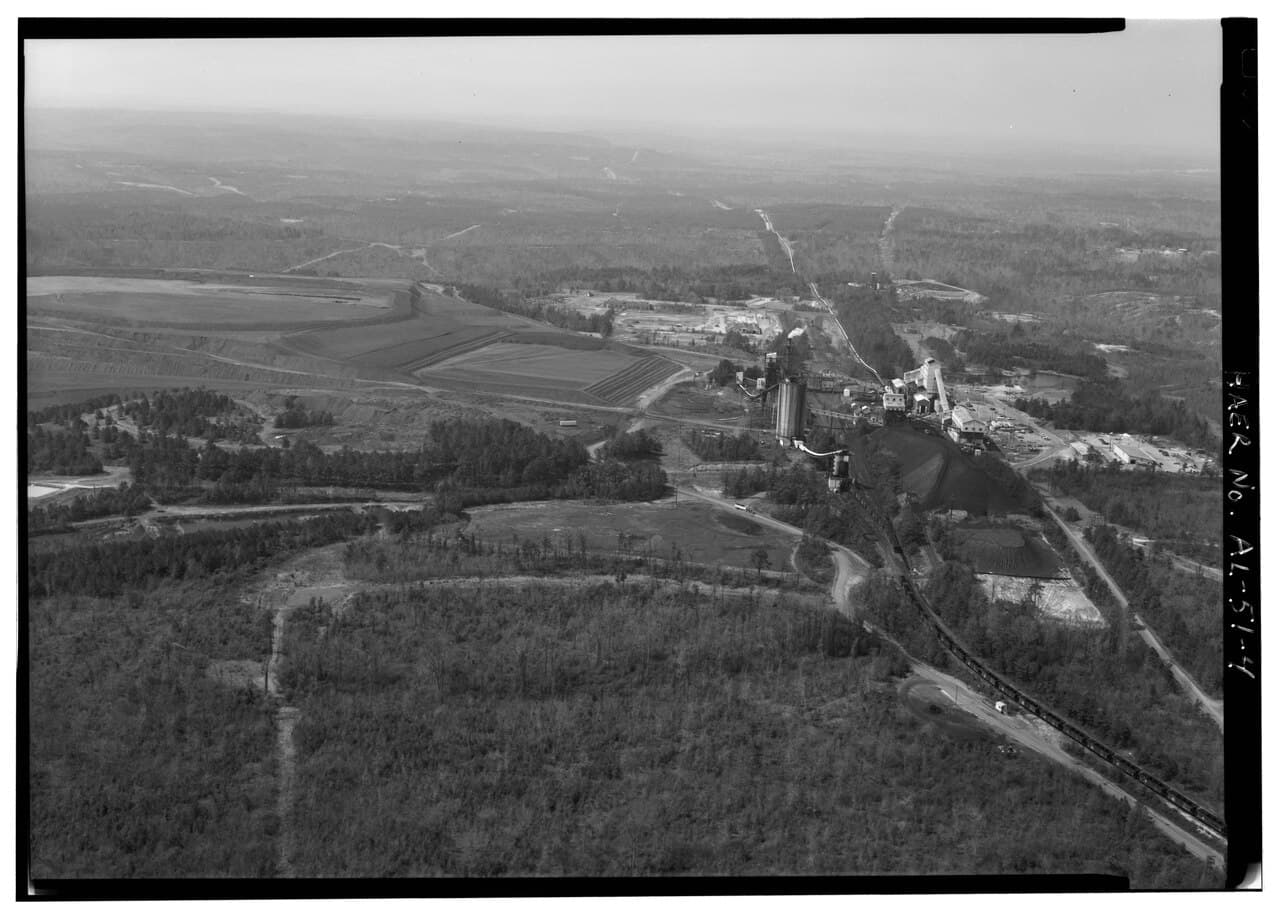
Coal (north-central Alabama): The Black Warrior Coal Basin spans Jefferson, Tuscaloosa, Walker, Fayette, Winston, and Marion Counties. This region has the longest coalbed methane development history in the United States, with commercial drilling beginning in the early 1980s. A second coal field runs through St. Clair, Jefferson, Shelby, and Bibb Counties. Active surface and underground mining operations still occur across this region. Buyers of land in any of these counties should treat a mineral title search as mandatory.
A lesser-known quirk applies here: coal rights and the gas trapped within coal seams have sometimes been conveyed separately in the Black Warrior Basin. Attorney review of the full mineral chain of title is not optional in these counties.
Oil and gas (south Alabama): Oil production is concentrated in the interior salt basin of southwest Alabama. Conecuh County accounts for roughly half the state's annual output; Mobile County's Citronelle Field has produced approximately 160 million barrels since its 1955 discovery. Significant producing areas also exist in Choctaw, Escambia, and Covington Counties. Buyers purchasing land in southwest Alabama should check the Alabama Oil and Gas Board well database before closing.
Limestone, marble, and other minerals: Limestone is quarried in all 67 Alabama counties, and the Sylacauga marble belt (Talladega County) supports active quarrying operations. Quarrying rights can be severed, though they are a less common concern than coal or oil rights for most buyers.
How Mineral Rights Get Separated From Surface Rights
Mineral rights are commonly severed through historical industrial acquisitions, deed reservations, separate mineral conveyances, and estate distributions. Railroad, coal, and timber companies purchased or reserved mineral rights across large tracts of north and central Alabama from the 1870s through the early 1900s, and those reservations remain legally binding today. A seller may also transfer the surface while explicitly reserving "all oil, gas, and other minerals" in the deed, or a prior owner may have sold the mineral rights outright through a separate mineral deed years or decades ago.
Because these transactions compound over time, the mineral chain of title on an Alabama property may be entirely different from the surface chain. A standard title search focused on surface ownership may not reveal any of this history.
What Severed Mineral Rights Mean for Your Surface Property
If you purchase Alabama land with severed mineral rights, the mineral owner, or a company holding an active lease, has legal authority to enter your property and conduct operations. Alabama's accommodation doctrine requires the mineral owner to use the least-damaging industry-standard method when one is available, but the doctrine has real limits: it protects only existing surface uses that predate the mineral activity, and courts have consistently upheld the mineral estate's dominance.
In practice, the risk varies by location. In active coalfield counties, underground mining can cause surface subsidence; a 2024 explosion in Walker County, linked to methane gas escaping from mining operations, resulted in a fatality and led federal regulators to intervene. In oil and gas country, an active lease may already mean a producing well or pipeline on adjacent property. In counties without extraction history, the exposure may be theoretical rather than near-term, but buyers should still confirm the mineral estate status.
Written surface use agreements are the most practical protection available. These negotiated contracts specify what surface areas can be used, what facilities can be built, and what compensation is paid for damage. Not every operator offers them voluntarily; buyers who discover active leases during due diligence should consult an attorney before closing.
How to Check Whether Mineral Rights Are Included
A thorough mineral title search is the only reliable way to know whether minerals convey with the surface. Here is what the process involves:
Start at the county probate court. In Alabama, the probate judge is the official recorder of deeds, mortgages, and mineral instruments. All 67 counties maintain deed books and grantor/grantee indexes at the probate court. You are looking for any deed in the chain that reserves minerals, any separate mineral deed, and any oil, gas, or mineral leases. Many counties now offer online access; Jefferson, Mobile, Baldwin, and Madison Counties all have searchable digital records.
Check the Alabama Oil and Gas Board. The Oil and Gas Board maintains a publicly searchable well permit database at gsa.state.al.us/ogb. If drilling permits exist on or near the property, that indicates active mineral development and should trigger further investigation.
Hire a professional. Most buyers should engage a petroleum landman, mineral abstractor, or real estate attorney with oil and gas experience. A full mineral abstract typically costs between $500 and $1,500 and takes one to two weeks. That is modest relative to the risk of discovering post-closing that a mineral operator can legally enter your property.
Confirm your title insurance coverage. Standard owner's title insurance policies in Alabama generally do not cover severed mineral interests. Ask the title company explicitly whether mineral rights are included and request an endorsement if they are not.
LandWise doesn't analyze mineral history; that requires a courthouse deed search and a petroleum landman or attorney. What it does surface is the surface-rights picture that interacts with active mineral activity: existing structures and footprint sq ft from tax records, road access (and whether your boundary touches a public road), and zoning. If you're investigating whether mineral activity has already altered the surface or fenced off parts of it, those are the layers that matter. For more context on how surface conditions shape what you can build, see our guides on Alabama zoning and soil types and septic systems in Alabama.
Alabama's Regulatory Framework for Mineral Activity
Two state agencies have authority over mineral operations on Alabama land. The Alabama Oil and Gas Board (gsa.state.al.us/ogb) regulates oil, natural gas, and coalbed methane operations: it issues well permits, sets spacing rules, and publishes production data. The Alabama Surface Mining Commission regulates coal mining under the state's equivalent of the federal Surface Mining Control and Reclamation Act; coal operators must obtain permits, post reclamation bonds, and restore mined land after surface operations. Surface owners can file written objections to permit applications and request formal hearings.
One notable 2024 development: Alabama's Carbon Dioxide Storage Facility Act, effective October 1, 2024, now vests pore space ownership in the surface rights owner unless those rights were previously severed. A surface deed in Alabama now generally carries pore space rights, which adds value as carbon capture and sequestration projects become commercially active.
What we'd actually do first
If the parcel is in any Black Warrior Basin county (Jefferson, Tuscaloosa, Walker, Fayette, Winston, Marion) or in southwest Alabama (Conecuh, Mobile, Choctaw, Escambia, Covington), assume the minerals are severed until a mineral abstract proves otherwise. Get a written quote from a petroleum landman or oil-and-gas attorney before signing the purchase contract, not after; $500 to $1,500 for an abstract is small compared to discovering at closing that an operator can drive a road across the front pasture.
For everywhere else in Alabama, ask the title company in writing whether their owner's policy covers severed mineral interests, and ask the seller to attach any prior mineral deeds or leases they're aware of as a contract exhibit. That single contract clause flushes most of the historical surprises out into the open before earnest money is at risk.