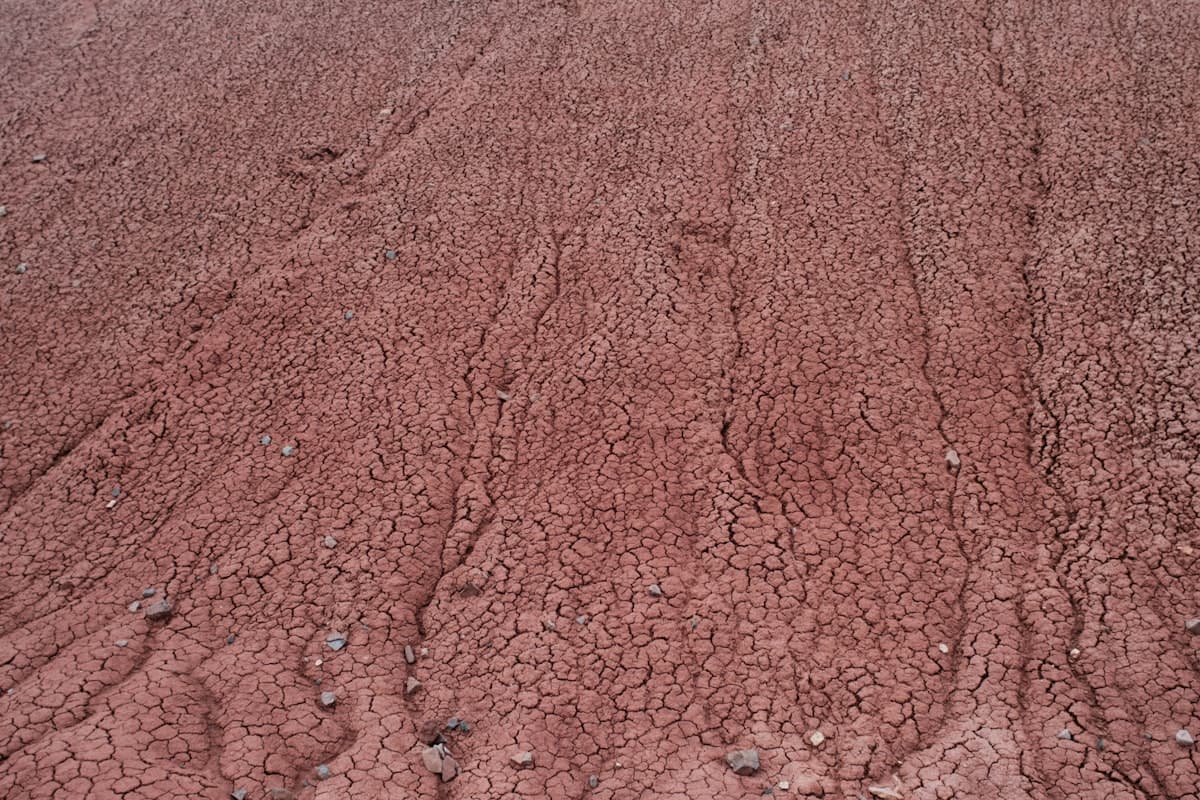

A 2016 survey of homes in Wilcox County found that roughly 60 percent of properties without municipal sewer access were discharging raw sewage directly into the environment. The cause wasn't negligence. It was soil: the dense Vertisol clay of Alabama's Black Belt absorbs water so slowly that conventional septic systems can't function in it.
If you're buying rural land in Alabama, a percolation test tells you whether the soil can handle a septic system at all. It isn't required before closing, but skipping it is how buyers end up owning land they can't build on.
What a Perc Test Measures
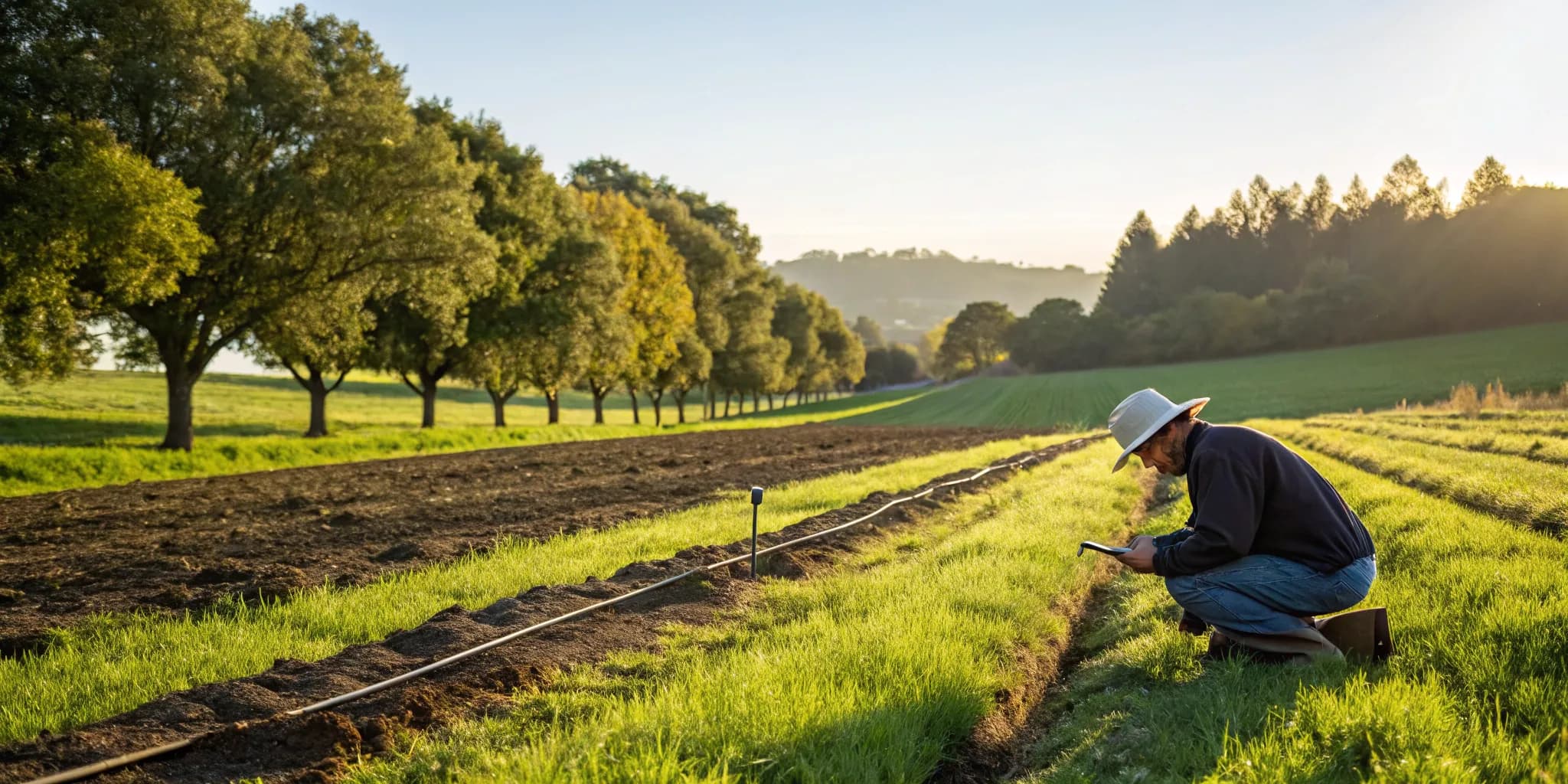
A percolation test measures how quickly water moves through soil. The tester digs a hole, saturates it, then records how long water takes to drop one inch. The result is reported in minutes per inch (MPI).
Alabama's governing regulation is Chapter 420-3-1 of the Alabama Administrative Code, administered by the ADPH Soil and Onsite Sewage Branch. Three rules within that chapter specify the exact procedure: Rules 420-3-1-.43, .44, and .45 set the hole diameter (4 to 8 inches), saturation time (at least 4 hours, preferably overnight), boring depth (minimum 48 inches), and reading intervals (every 30 minutes until the last three readings each drop no more than 1/8 inch).
There's no single published pass/fail number, but soils slower than 60 MPI can't support a conventional gravity-flow septic system under Alabama rules. At that threshold, a registered engineer must design an alternative system, and costs jump sharply.
Who Performs the Test
Alabama requires a licensed professional to conduct or supervise the soil evaluation. Four credentials qualify:
- Licensed Professional Engineer (PE)
- Licensed Professional Geologist (PG)
- Licensed Professional Land Surveyor (PLS)
- Professional Soil Classifier (licensed by Alabama's State Board of Registration for Professional Soil Classifiers)
County health departments are the local permitting authority. Once the evaluator submits results, the county issues a Permit to Install, which is required before any septic system can be constructed. No septic permit means no residential building permit on properties without municipal sewer access.
The Alabama Onsite Wastewater Board (AOWB), established in 1999, licenses septic installers separately from the soil evaluators listed above. If you eventually hire a contractor to build the system, confirm they appear on the AOWB's public roster before signing anything.
The Black Belt Problem
Alabama's Black Belt is a roughly 17-county arc through the center of the state including Lowndes, Wilcox, Hale, Marengo, Perry, Dallas, and Bullock counties. It is named for the dark, heavy clay soils overlying Selma Chalk. These are Vertisol-type soils: they swell when wet, crack when dry, and absorb water so slowly that perc rates routinely exceed 60 MPI by a wide margin.
On a parcel in this region, a conventional septic system isn't just unlikely. It's effectively prohibited by the rules. Engineers can sometimes design alternatives (drip irrigation, constructed wetlands, low pressure pipe systems), but installation costs typically run $10,000 to $25,000 versus $3,000 to $10,000 for a conventional gravity system. Some parcels in the Black Belt can't support any onsite sewage system at all. Without a sewer line nearby, that land can't be permitted for residential construction.
Alabama's onsite sewage rules recognize soil morphology and detailed soil mapping as valid alternatives to a physical perc test, precisely because SSURGO-classified soils in these regions are predictably problematic. USDA's soil survey database already flags most Black Belt soil types as having "very limited" suitability for septic use, before anyone digs a hole.
LandWise pulls SSURGO data for any Alabama parcel and assigns a perc-risk rating (high, moderate, or low) along with a septic-feasibility verdict (suitable, marginal, or unsuitable) based on drainage class, hydrologic group, water-table depth, and depth to restrictive layer. It doesn't replace the county test you'll need for a permit, but it tells you which parcels are worth spending $500 to $1,500 to test before you make an offer, and which ones you can probably rule out from the data alone.
Cost and Process
A site evaluation takes half a day to a full day on site. Two test holes are required for a single-family dwelling (spaced at least 30 feet apart), so the professional saturates them and returns the next morning for readings. A written report follows within a few days.
Costs vary by county and professional:
- Basic perc test and report (no heavy excavation): roughly $260 to $370 statewide average
- Properties requiring a backhoe for observation pits: add $200 or more per pit
- Full evaluation with permitting documentation: typically $500 to $1,500 for a standard residential lot
- Engineer-designed alternative system (when conventional fails): $1,000 to $2,500 in design fees, plus $10,000 to $25,000 for installation
No perc test is legally required before you close. But ADPH's own guidance for buyers is blunt: "It's cheaper to check before you buy."
When the Soil Fails
A perc rate above 60 MPI triggers the alternative system path. A licensed engineer evaluates the site and designs one of the options approved under Chapter 420-3-1: mound systems, low pressure pipe systems, drip irrigation, aerobic treatment units, sand filters, or constructed wetlands.
These alternatives can work on many sites. A drip irrigation system on a modestly slow-draining rural lot is a manageable added expense. On a Black Belt parcel where the clay is nearly impermeable and the water table is shallow, there may be no path to a septic permit. That makes the land unbuildable for residential use unless a municipal sewer line is accessible, which in rural Alabama it often isn't.
The practical question isn't whether the parcel fails. It's whether failure leads to a $15,000 mound system or an unbuildable lot. That distinction is often visible in SSURGO data before you ever schedule a test.
For how soil types play out across the state more broadly, see How Soil Type Affects Septic Systems in Rural Alabama. If you're also looking at land in Tennessee and want to compare the process there, Understanding Perc Tests in Tennessee covers the TDEC rules and what differs across the state line.