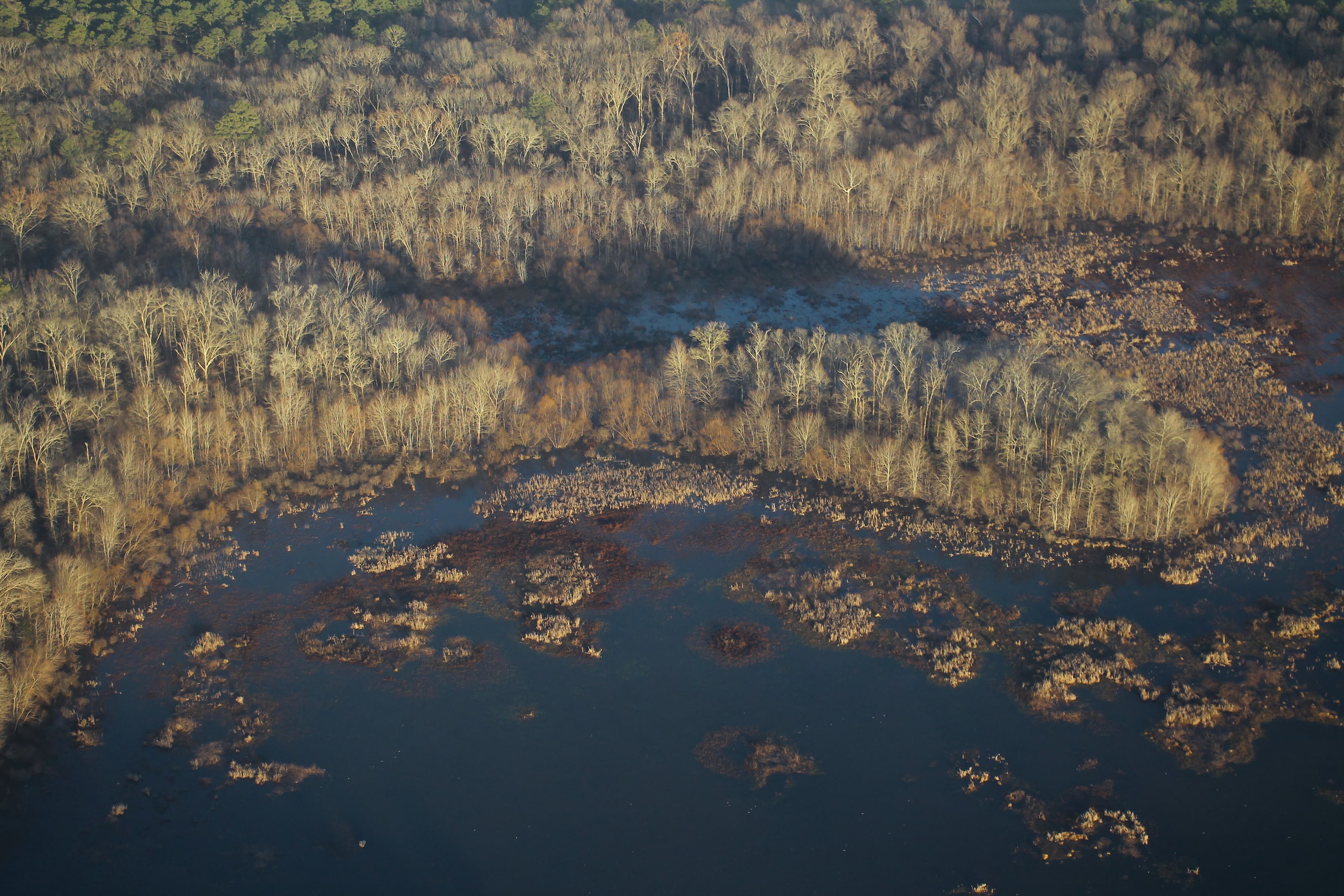
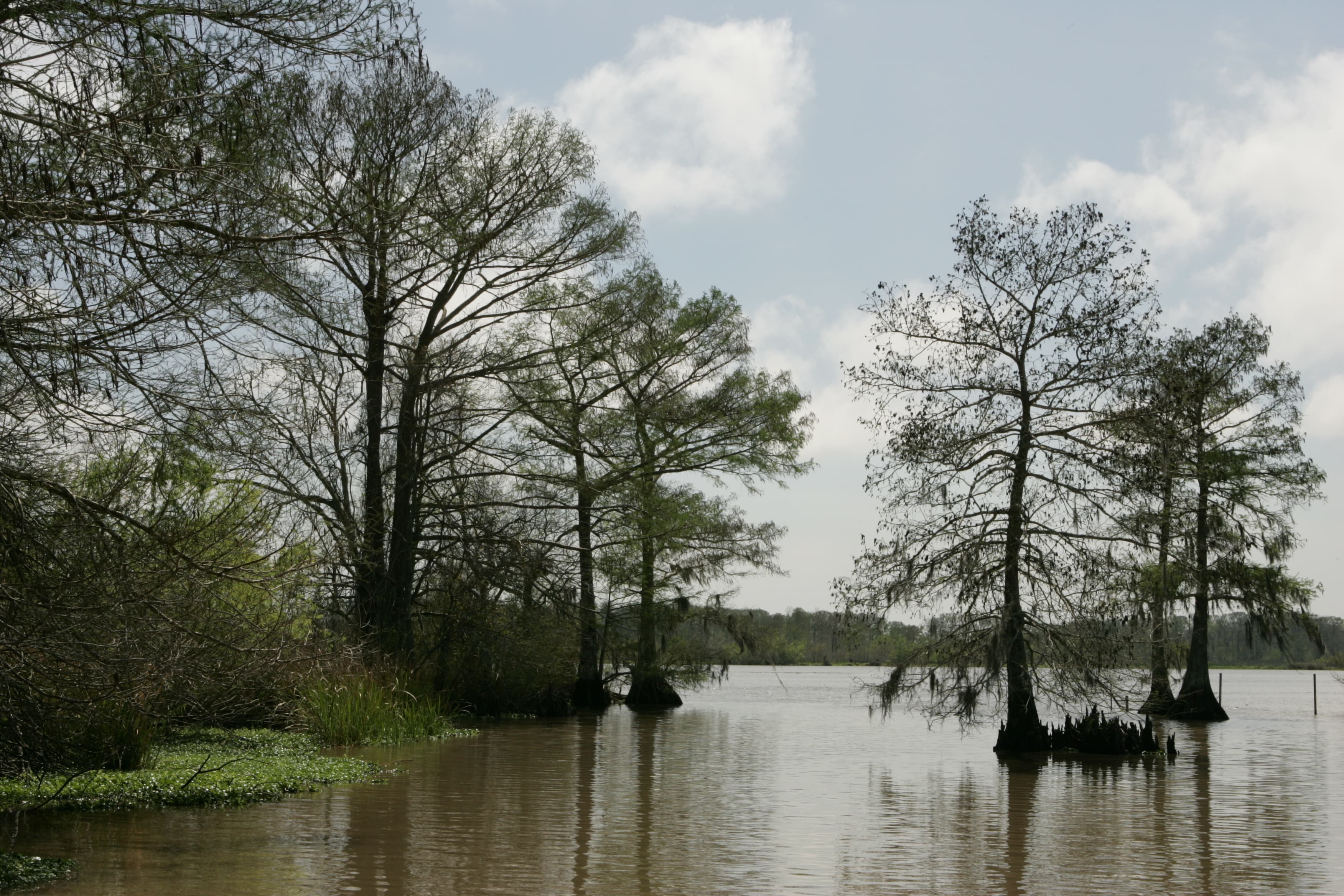
Tennessee protects "waters of the state" more broadly than the federal Clean Water Act protects "waters of the United States," meaning a wet draw on a West Tennessee parcel can be fully outside Corps jurisdiction and still need an ARAP permit before you touch it. With roughly 640,000 to 787,000 wetland acres remaining statewide and a "no net loss" mitigation standard, an unpermitted bulldozer pass can convert a buildable parcel into a restoration order overnight.
What Counts as a Wetland in Tennessee
Most people picture standing water when they hear "wetland," but many regulated wetlands in Tennessee look nothing like a swamp. Under both federal and state definitions, a wetland is any area where three conditions are met simultaneously:
- Hydric soils: soils that formed under saturated conditions, typically showing gray or mottled coloring below the surface
- Hydrology: evidence that the area is periodically saturated or flooded, even if it appears dry during your site visit
- Hydrophytic vegetation: plants adapted to wet conditions, such as cattails, willows, sedges, or certain species of oak and tupelo
All three criteria must be present. A low-lying area with wet soils but no characteristic vegetation may not qualify. Conversely, a wooded area that looks perfectly dry in summer could meet all three criteria during the spring growing season.
Common Wetland Types in Tennessee
Tennessee's wetlands vary significantly by region:
- Bottomland hardwood forests: the most widespread type, especially in West Tennessee. These forested floodplains along rivers and streams support species like overcup oak, green ash, and bald cypress.
- Emergent marshes: open wetlands dominated by grasses and sedges, found along lake margins and in river floodplains.
- Beaver ponds and impoundments: created when beavers dam streams, these wetlands are common across Middle and East Tennessee.
- Highland bogs: rare, high-elevation wetlands found in the mountains of East Tennessee, often containing unique and protected plant species.
- Wet meadows: seasonally saturated grasslands that may appear completely dry in late summer.
Palustrine wetlands, those associated with inland freshwater systems rather than tidal or coastal environments, make up the vast majority of Tennessee's wetland acreage.
Why Wetlands Create Development Restrictions
Wetlands filter pollutants, control flooding, recharge groundwater, and provide habitat for fish and wildlife. Because of their importance, both federal and state laws restrict what you can do in or near them.
Federal Protection: Section 404 of the Clean Water Act
Under Section 404, any activity that involves discharging dredged or fill material into "waters of the United States," including most wetlands, requires a permit from the U.S. Army Corps of Engineers (Nashville District for Tennessee). This applies to common development activities like:
- Grading or filling land for a building pad
- Constructing a driveway or road across a wet area
- Installing a pond or dam
- Laying utility lines through wetland areas
The Corps issues two main types of permits. Nationwide Permits cover minor impacts (generally under half an acre) with a streamlined review. Individual Permits are required for larger impacts and involve a detailed alternatives analysis, public comment period, and environmental review that can take six months to over a year.
State Protection: Tennessee's ARAP Permit
Tennessee adds its own layer of regulation through the Aquatic Resource Alteration Permit (ARAP), administered by the Tennessee Department of Environment and Conservation (TDEC). Any alteration to a stream, river, lake, or wetland in Tennessee requires an ARAP or a Section 401 Water Quality Certification from TDEC.
Critically, Tennessee's definition of protected "waters of the state" is broader than the federal definition of "waters of the United States." This means some wetlands that fall outside federal jurisdiction are still protected under Tennessee law. You cannot assume that just because an area is not federally regulated, you are free to develop it.
TDEC issues General ARAPs for minor impacts to isolated wetlands and other low-impact activities. For larger projects, an Individual ARAP is required, and TDEC's review runs concurrently with the Corps' Section 404 review.
Mitigation Requirements
Both the Corps and TDEC follow a "no net loss" standard. If your project will impact wetlands and you receive a permit, you will almost certainly be required to mitigate those impacts. Mitigation typically follows a sequence:
- Avoid: redesign the project to avoid wetland impacts entirely
- Minimize: reduce the footprint of unavoidable impacts
- Compensate: offset remaining impacts through wetland creation, restoration, or purchasing credits from a mitigation bank
Purchasing mitigation bank credits in Tennessee can cost thousands of dollars per acre of impact. The exact cost depends on the service area and type of wetland affected, but it adds a significant expense to any project that cannot avoid wetland areas.
How to Identify Wetlands Before You Buy
The best time to discover wetlands on a property is before you close, not after. Here are practical steps Tennessee land buyers should take.
Check the National Wetlands Inventory
The U.S. Fish and Wildlife Service maintains the National Wetlands Inventory (NWI), a publicly available map of known wetlands across the country. You can view NWI data at the FWS Wetlands Mapper website by entering a property address or coordinates.
The fear most rural buyers describe is "the whole back of the parcel is wetland and I won't be able to build." LandWise overlays the NWI on the actual parcel boundary and returns the percent coverage, the dominant Cowardin classification (system, class, water regime), and a per-type breakdown, so you can usually see whether you are looking at a 4% riparian strip along a creek or a 60% bottomland hardwood forest before you pay for a delineation. It is not a substitute for a USACE jurisdictional determination, but it answers the screening question for a few dollars instead of a few thousand.
However, the NWI has significant limitations. It is based on aerial photography and does not capture all wetlands, particularly small or forested wetlands that are difficult to detect from the air. A property that appears clean on the NWI map may still contain regulated wetlands.
Walk the Property During Wet Season
Visit the property during late winter or early spring when water tables are highest. Look for standing water, saturated soils, water-stained leaves, and the types of vegetation described above. Pay special attention to low-lying areas near streams, drainage channels, and the edges of ponds.
Hire a Wetland Consultant for a Delineation
If you suspect wetlands are present, or if you are planning a significant development project, the most reliable step is to hire a qualified wetland consultant to perform a formal wetland delineation. The consultant will walk the property, collect soil samples, document vegetation, and map the boundaries of any wetlands using the Corps of Engineers' 1987 Wetland Delineation Manual and the applicable Regional Supplement for Tennessee (Eastern Mountains and Piedmont or Atlantic and Gulf Coastal Plain, depending on location).
A wetland delineation for a small parcel (under five acres) typically starts around $3,500, with costs increasing for larger or more complex sites. While that is a meaningful expense, it is far less than the cost of discovering wetlands after you have already purchased the property and begun planning a project that cannot be permitted.
Request a Jurisdictional Determination
After a delineation, you can ask the Corps of Engineers to issue a formal Jurisdictional Determination (JD) confirming whether the identified wetlands fall under federal jurisdiction. This gives you a definitive answer about what permits will be required.
What to Do If Your Property Has Wetlands
Wetlands on a property do not automatically make it unbuildable, but they do constrain where and how you can develop. Key strategies include:
- Build outside wetland boundaries. If the wetlands are confined to one portion of the parcel, you may be able to site your home, septic system, and driveway entirely outside the delineated area.
- Use required setbacks. Some local jurisdictions require buffer zones around wetlands. Even where they do not, maintaining a buffer protects you from inadvertently impacting the wetland during construction.
- Budget for permitting and mitigation. If impacts are unavoidable, factor in the time and cost of obtaining ARAP and Section 404 permits, plus mitigation expenses. This can add months to your project timeline.
- Consider the impact on septic. Wetland soils are saturated by definition, which means they will not pass a percolation test. If wetlands cover a significant portion of your lot, finding a suitable septic field location becomes more challenging.
What we'd actually do first
Pull NWI coverage on the parcel boundary before you go look at the listing in person; if more than 20% of the parcel maps as wetland or the building envelope you want sits inside a Cowardin PFO (palustrine forested) polygon, treat the asking price as encumbered and either renegotiate by the lost acreage or walk. If the screening looks workable, write a wetland-delineation contingency into the offer, visit the parcel in late winter or early spring when soils are saturated, and budget $3,500 to $15,000 for a Corps-accepted delineation report before closing. Saturated wetland soils also automatically fail percolation testing, so see how soil type affects septic systems in Tennessee if the parcel is also off-sewer.