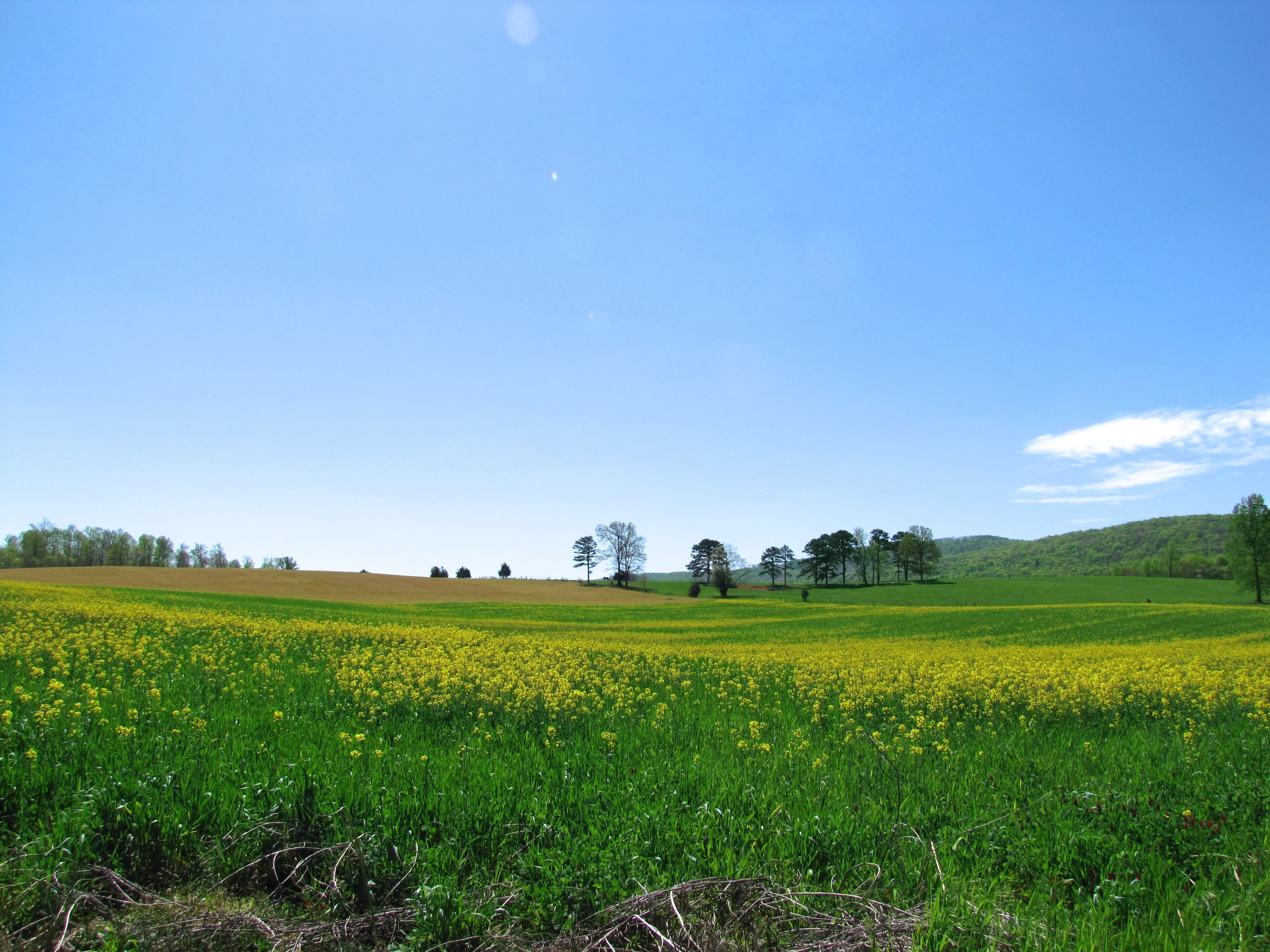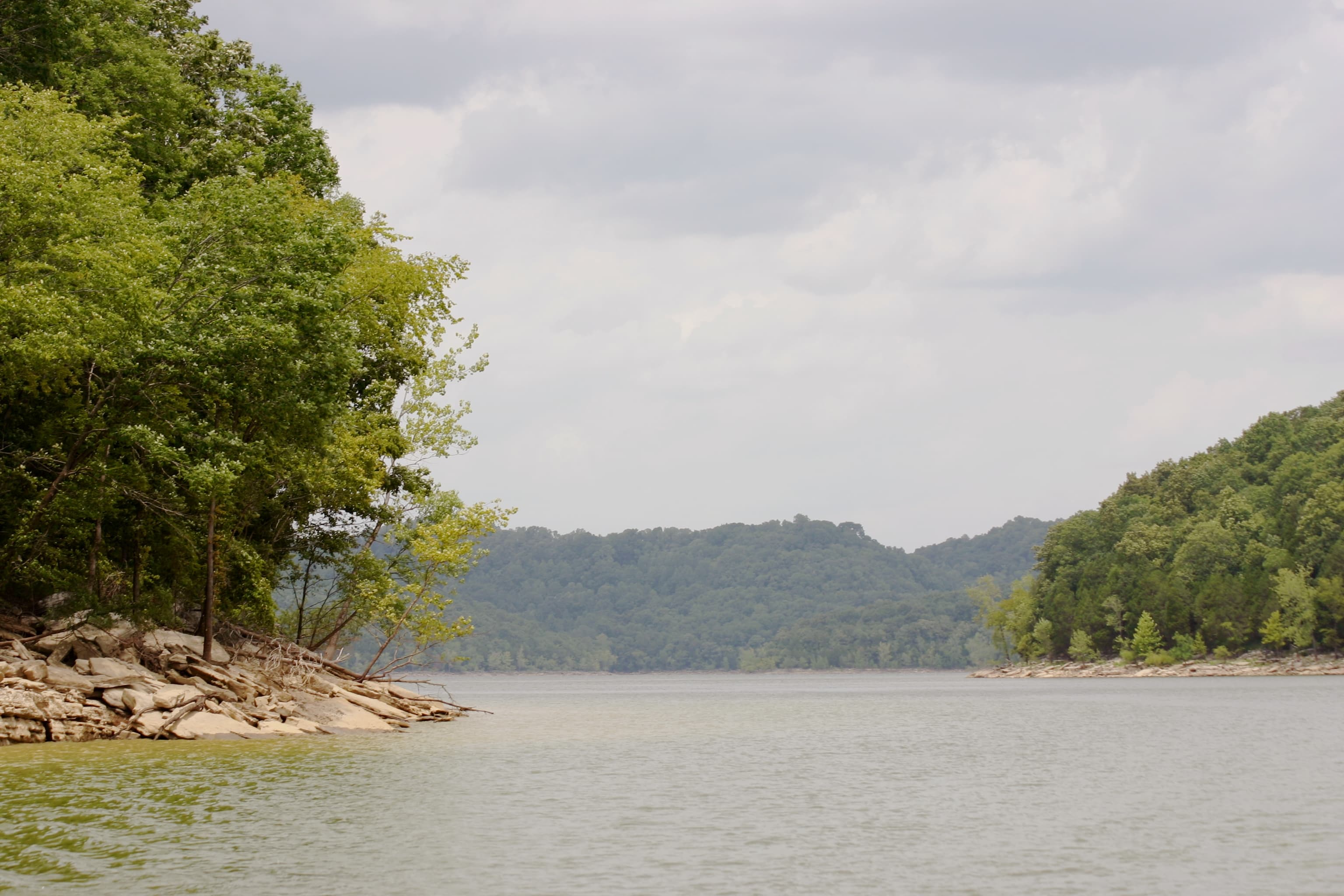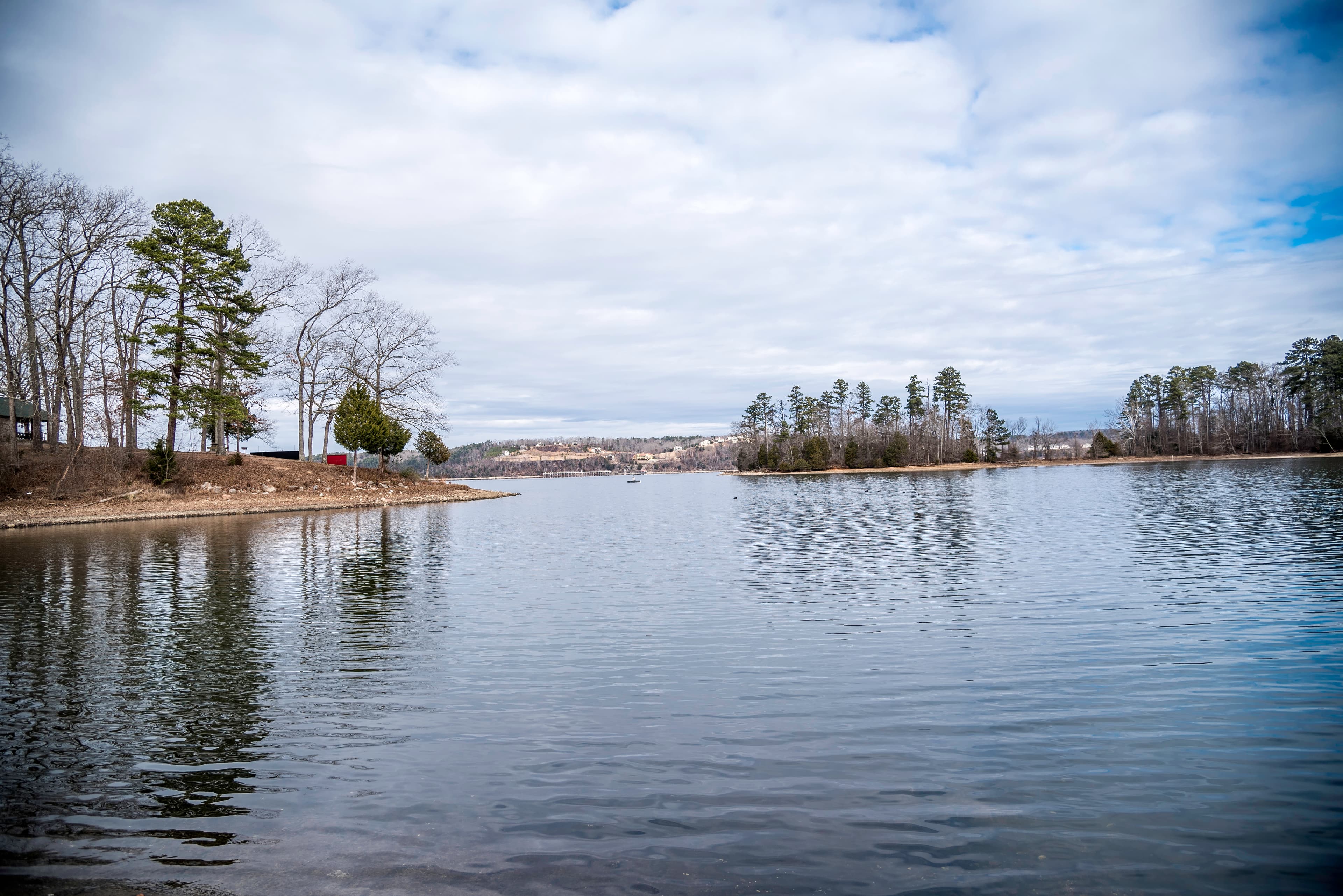

Bedrock sits less than 12 inches below the surface on a meaningful share of Cumberland County parcels. That single fact, more than zoning or price or road frontage, is what kills the most plateau land deals after a buyer has already paid earnest money. Cumberland County sits atop the Cumberland Plateau in east-central Tennessee, roughly 70 miles west of Knoxville and 100 miles east of Nashville, with more than 900 active listings at any given time and land prices averaging around $29,800 per acre.
Why People Buy Land Here
Crossville, the county seat, has earned the nickname "Golf Capital of Tennessee" thanks to nine championship courses. But golf is just one draw. The county has a median resident age of 53.5 years, reflecting decades of in-migration from retirees seeking lower costs, mild summers at 1,500 to 1,800 feet elevation, and the quiet of a lightly populated plateau.
Recreational buyers are equally active. The surrounding plateau holds exceptional hunting for deer, turkey, and small game, and the Obed Wild and Scenic River runs through the county's northern sections. Cumberland Mountain State Park offers hiking, fishing, and camping. For buyers coming from Nashville or Knoxville, the plateau offers privacy and scenery without an all-day drive.
Land prices reflect the variety of use cases. Wooded tracts average around $16,900 per acre while unrestricted raw land can be found closer to $10,000 to $15,000 per acre depending on access and utilities. Properties near Crossville or within deed-restricted communities command premiums.
Zoning: Less Restrictive Than You Might Expect
One of the first questions land buyers ask is whether Cumberland County has zoning. The answer is nuanced.
The City of Crossville has surprisingly limited zoning. The city code addresses airports, floodplains, signs, and mobile home parks, but it does not establish conventional commercial, residential, or industrial zoning districts. Individual deed restrictions and subdivision covenants fill that gap for many neighborhoods, but the city itself does not restrict land use the way most Tennessee cities do.
Unincorporated Cumberland County does have formal zoning administered by the Cumberland County Planning Commission, reachable at (931) 979-2170. County regulations generally permit agricultural and residential uses on rural parcels with fewer restrictions than you would find in a suburban county. That said, subdivision regulations and building codes apply, and a new Cumberland County Codes Department began operations in January 2024 to handle building permits and inspections for unincorporated areas.
Before you close on any parcel, confirm its zoning classification with the Planning Commission and check for deed restrictions at the Cumberland County Register of Deeds at (931) 484-5559. Well-known deed-restricted communities like Cumberland Cove (about 8,000 acres near Monterey) and Cumberland Lakes have their own rules that go well beyond county minimums.
The Soil and Septic Challenge
This is the issue that surprises buyers most on the plateau. Cumberland County soils are underlain by Pennsylvanian-age sandstone, shale, and siltstone. The soils are typically well-drained and acidic, which sounds like good news for septic systems, but there is a catch that disqualifies a meaningful share of parcels: bedrock is often shallow, sometimes less than one foot below the surface in rocky areas.
When bedrock is this close to grade, conventional gravity septic systems frequently cannot be permitted. Tennessee requires a licensed soil scientist to evaluate the site before a septic design can be submitted. If the scientist finds insufficient soil depth or unsuitable drainage, you will need an engineered solution such as a mound system or a pressure-dosed spray irrigation system. These alternatives work well but cost significantly more than a standard drain field.
Always obtain a soil feasibility evaluation before making an offer on vacant land in Cumberland County. Septic permits are issued by the state through the TDEC Cookeville Environmental Field Office at (931) 520-6688, and a state permit must be in hand before the county will process a building application.
If you're worried about driving two hours to look at a plateau parcel that turns out to be unbuildable on shallow rock, a LandWise report on the parcel pulls the SSURGO soil series, drainage class, depth to restrictive layer, and a perc-risk rating (high/moderate/low) before you make the trip. It also returns FEMA flood zone coverage, mean and max slope, and distance to the nearest road, so you can rule out the obvious dealbreakers from your laptop. It is not a substitute for a licensed soil scientist's evaluation, but it tells you whether commissioning one is worth the money. See our writeup on perc tests in Tennessee for what a formal evaluation involves.
Utilities on the Plateau
Power: Most of Cumberland County is served by Upper Cumberland Electric Membership Corporation (UCEMC), a TVA cooperative. Extending power to a vacant parcel is straightforward in areas with existing infrastructure, though costs rise quickly on long runs through steep terrain. Budget for the line extension quote before assuming power access is simple.
Water: The City of Crossville operates a municipal water system drawing from Holiday Hills Lake and Meadow Park Lake. Several utility districts serve areas outside the city, including Catoosa Utility District, Crab Orchard Utility, and West Cumberland Utility District. Properties beyond utility district boundaries typically rely on private wells drilled into fractured plateau sandstone. Water is generally available but well depths and yields vary; a well driller familiar with local rock formations is worth consulting.
Broadband: This is one area where Cumberland County has made real progress. Spectrum has deployed gigabit broadband service to roughly 2,700 homes in the county, and federal ReConnect grants have brought fiber to additional rural areas. Still, coverage is uneven. Check the FCC Broadband Map and ask providers directly about serviceability at a specific parcel address before assuming connectivity.
Sewer: Inside Crossville city limits, low-pressure sewer is available in many neighborhoods. Outside the city, you are on septic.
Road Access and Private Roads
Tennessee law (T.C.A. § 54-7-202) prohibits counties from using public equipment or materials to improve or repair private roads, with narrow exceptions for school bus and mail carrier turnarounds. This matters on the plateau because many rural parcels were subdivided decades ago with private road easements that the county has never maintained and will not maintain.
Before purchasing a parcel served by a private road, confirm who is responsible for maintenance, whether a road maintenance agreement exists among neighboring owners, and what condition the road is currently in. Gravel road upkeep in rocky plateau terrain can be expensive, particularly after wet winters.
The Cumberland County Highway Department at (931) 484-5424 can tell you whether a specific road is on the county maintenance list.
Flood Zones and Wetlands
The plateau's high elevation means that most parcels are not in FEMA-designated flood hazard areas. However, the county does have low-lying creek corridors and cove areas that carry flood designations, particularly along Obed River tributaries. Always verify flood zone status for any parcel using the FEMA Flood Map Service Center (msc.fema.gov). For a fuller view of how flood mapping works in the state, see our Tennessee flood zones guide.
Wetlands on the plateau tend to be isolated upland swamps and seeps in low-lying hollows. They are less common than in West Tennessee's bottomlands, but they do occur. A wetland delineation is worth requesting on any parcel with obvious drainage swales or persistently wet areas, since federal permitting requirements apply regardless of state zoning.
What we'd actually do first
Before paying for a survey or commissioning a soil scientist, do the cheap reconnaissance in this order. Pull the SSURGO soil series and depth-to-bedrock for the parcel, check the FEMA flood zone, and confirm road status with the Cumberland County Highway Department at (931) 484-5424. If the parcel is in a named development like Cumberland Cove or Cumberland Lakes, call the Register of Deeds at (931) 484-5559 and ask whether restrictive covenants are recorded against the parcel ID; covenants on the plateau are often more limiting than the county's own rules.
Only then is it worth scheduling a licensed soil scientist's site visit and getting a UCEMC line-extension quote. Those two numbers (the soil scientist's septic feasibility finding and the power-extension cost) are usually what determines whether the asking price is reasonable. If a seller refuses to allow a soil evaluation as a contingency, walk away; on the plateau, that contingency is the deal.