
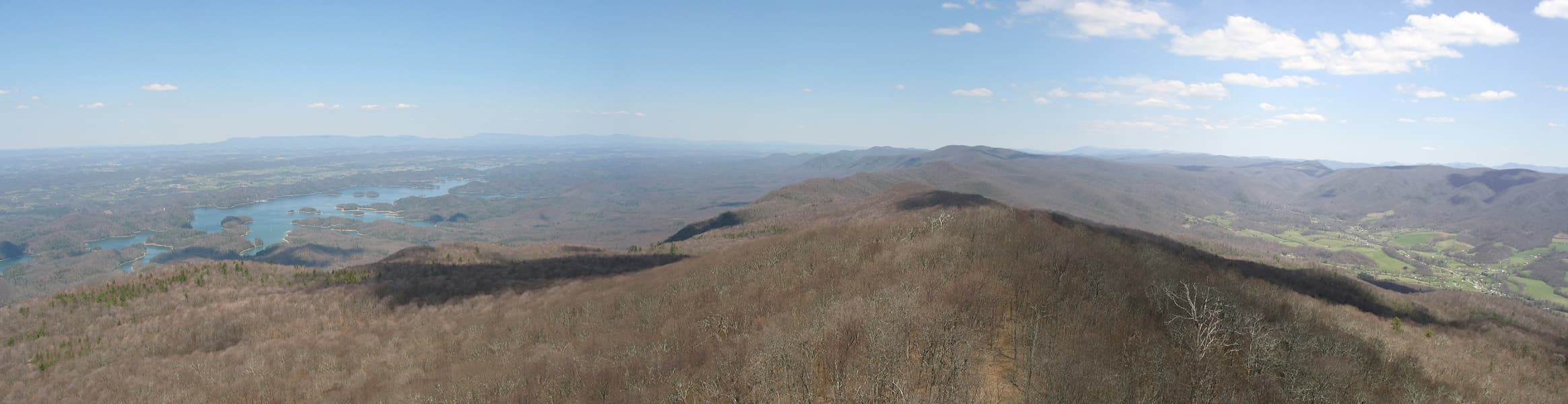
Boone Lake ran nearly empty from 2014 to 2022.
In October 2014, TVA discovered a sinkhole and seepage problem beneath Boone Dam, located at the junction of the South Fork Holston and Watauga rivers in eastern Sullivan County. The reservoir was drawn down, and repairs over the following eight years cost an estimated $200 to $300 million. Waterfront properties along Boone Lake's 168 miles of shoreline spent years with exposed mudflats where the water used to be. TVA completed the work and refilled the lake by May 25, 2022.
That episode says something about what buyers face here: Sullivan County's landscape is shaped by geology and water in ways that don't always show up in a listing photo. The county sits in Tennessee's northeast corner, anchored by the Tri-Cities of Kingsport, Bristol, and Johnson City. It's the state's second-oldest county (established 1779), and the terrain and regulations reflect that layered history.
The Lay of the Land
Sullivan County splits into two distinct physiographic zones.
The western two-thirds sits in the Ridge-and-Valley Appalachians: long parallel ridges trending northeast-southwest, separated by agricultural valleys and creek drainages. Valley floors run 1,100 to 1,500 feet in elevation; ridge tops reach 1,500 to 2,500 feet. The terrain is manageable, the soils deeper, and this is where most of the county's farmland and rural residential lots are concentrated.
The eastern county rises into the Blue Ridge Mountains. Holston Mountain forms the eastern boundary at 4,280 feet and is managed largely as Cherokee National Forest (Watauga Ranger District). Slopes in this zone are steeper, soils shallower, and private parcels are less common. Buyers looking at eastern Sullivan County should expect building-site limitations and confirm road access carefully before going under contract.
Hollow communities are common across both zones: single roads threading up narrow valleys to serve a handful of properties. Private roads with recorded easements are the norm in these areas. For more on how Tennessee courts treat landlocked parcels and private road access, see Landlocked Land and Road Access in Tennessee.
Rural land in the 20- to 100-acre range currently trades between $13,000 and $20,000 per acre. Smaller parcels near Bristol or Kingsport push higher, sometimes $50,000 to $75,000 per acre for development-ready lots. Timberland and agricultural ground in the Ridge-and-Valley corridor typically comes in below $15,000 per acre.
Zoning
Sullivan County has had zoning since 1988, one of the earlier county-level adoptions in East Tennessee. The current resolution was last updated May 8, 2025, and operates under T.C.A. §§ 13-7-101 through 13-7-119. For buyers accustomed to unzoned Tennessee counties, this matters.
The primary rural districts are A-1 and A-2 (Agricultural), with AR (Agricultural-Residential) covering transitional areas. Residential development outside city limits generally falls under R-1 or R-2. The county also has commercial and industrial designations near the Tri-Cities urban core.
Before you write an offer on any unincorporated Sullivan County parcel, confirm the zoning district and permitted uses. The Sullivan County Department of Planning and Codes handles zoning inquiries at 3425 Highway 126, Suite 101, Blountville, TN 37617, phone (423) 323-6440, open Monday through Friday, 8 a.m. to 5 p.m.
One geographic note: Blountville, the county seat, is Tennessee's only unincorporated county seat, so you'll deal with county agencies directly for most land use questions rather than a city planning department.
Flood Risk and the Holston System
Three river systems cross Sullivan County: the South Fork Holston, the North Fork Holston, and the Watauga. TVA operates multiple dams in and around the county (South Holston Dam, Boone Dam, Fort Patrick Henry Dam), and the reservoir system provides meaningful flood control in the main river corridors.
Flood risk doesn't disappear, though. Tributaries throughout the county carry FEMA-mapped floodplains, and parcels along Stoney Creek, Beaver Creek, Indian Creek, and dozens of smaller drainages may have Special Flood Hazard Area (SFHA) designations. Before closing on any Sullivan County parcel, pull the FEMA Flood Map Service Center entry at msc.fema.gov to check zone designation. SFHA parcels require flood insurance for federally-backed mortgages, and some carry development restrictions on the portion within the 100-year floodplain. For a deeper look at how Tennessee FEMA zones work, see Understanding Tennessee Flood Zones.
The karst factor adds a second concern. Sullivan County's limestone geology creates sinkhole risk throughout the Ridge-and-Valley zone. Worley's Cave runs 4.4 miles through the county (the second-longest cave in East Tennessee), which gives you a sense of how extensively the bedrock has been dissolved here. Sinkholes can open suddenly, are not covered by standard flood insurance, and TDEC's subsurface sewage disposal rules under Rule 0400-48-01 explicitly prohibit placing drainfields near sinkhole features. Any parcel in a karst-heavy area deserves a ground investigation before purchase.
Soil and Septic in Karst Country
Karst geology complicates septic feasibility in ways that aren't obvious until a soil evaluation. The most problematic Ridge-and-Valley sites are ridge tops with thin soils over shallow limestone: the 12-to-18-inch minimum depth above bedrock required for a conventional drainfield often isn't there. Sites in hollow bottoms and valley floors carry a different problem: poorly drained alluvial soils with high seasonal water tables that fail perc tests for the opposite reason.
Tennessee law (T.C.A. § 68-221-403) requires a licensed soil scientist to evaluate any lot before septic permitting. Conventional drainfields are the cheapest option. Sites that fail the conventional test may still qualify for engineered alternatives (mound systems, drip irrigation systems), but at significantly higher cost. Sullivan County Environmental Health handles septic permits at (423) 323-1673.
If you're evaluating multiple parcels before committing to a site visit, LandWise pulls SSURGO drainage class, hydrologic group, water-table depth, and depth-to-restrictive-layer for each parcel, then assigns a perc-risk rating (high, moderate, or low) and a septic-feasibility verdict (suitable, marginal, or unsuitable). On a karst ridge lot in Sullivan County, that pre-screening can tell you whether a parcel is worth ordering a site evaluation before you spend $500 to $800 on a soil scientist visit.
For more detail on how perc tests work statewide, see Understanding Perc Tests in Tennessee.
Well water carries its own karst risk. Groundwater in limestone aquifers travels through fractures and conduit systems rather than filtering slowly through granular material, meaning surface contamination can reach wells quickly. An Appalachian Voices study published in 2022 tested 50 springs across six northeast Tennessee counties and found 100% positive for fecal coliform. Any purchase that relies on a private well should include comprehensive water quality testing (coliform, E. coli, nitrates, pH, radon) before closing. Sullivan County Environmental Health at (423) 323-1673 can point you toward certified labs.
Property Taxes and the Greenbelt Option
Sullivan County's current property tax rate runs approximately $1.66 per $100 of assessed value, with land parcels assessed at 25% of appraised value. A 50-acre parcel appraised at $650,000 would carry a tax bill around $2,700 per year at full assessment.
If the land qualifies as agricultural use, the Greenbelt Law (T.C.A. §§ 67-5-1001 through 67-5-1050) can substantially reduce that number. Qualifying land is assessed at current-use value rather than market value. The minimum threshold is 15 acres, and the land must either produce at least $1,500 in average annual gross farm income or meet the long-term ownership and residence criteria. The application deadline is March 15 each year. Rollback taxes apply if the land is later converted out of agricultural use: three years for agricultural and forest land, five years for open space.
For a full breakdown of how Tennessee Greenbelt eligibility works, see Tennessee Property Taxes for Vacant Land.
Before You Make an Offer
Sullivan County's combination of karst geology, active zoning, and river-system flood risk means standard due diligence carries real weight here. At minimum: confirm the zoning district and permitted uses with Planning and Codes, pull the FEMA flood map for any parcel near a creek drainage, order a soil evaluation before waiving septic contingencies, and verify public road frontage or a recorded easement for any parcel accessed by a private road.
The Sullivan County Register of Deeds maintains an online deed search at sullivandeeds.com. That's the first stop for reviewing recorded easements, plat history, and deed chain before a title search. The property assessor's office at (423) 323-6455 can confirm current tax assessment and any existing greenbelt enrollment.